

First things first; if you haven’t seen this film, do your absolute best not to read too much about it. I’m serious. I had this film spoiled for me before I ever got to see it, and I promise you, it will hit a lot harder if you stay in the dark. I’m only going to talk about basic plot points, themes and moments that won’t ruin a first viewing experience. Sounds good? Okay then, point number 1.
Holy sh*t!
Based on a Japanese manga from the 90s, Oldboy tells the tale of Oh Dae-Su, a man who is one day whisked off the street and thrown into a private prison. No one will tell him why he’s there or who put him there, and he ends up spending 15 years inside this tiny room. He uses his free time to train his body and plot his revenge, but is one day randomly released back into the world. With nothing but revenge on his mind, Oh Dae-Su sets out to find the one responsible for his imprisonment, which leads him down a winding rabbit hole that leads to some truly twisted realizations.

Park Chan-Wook is one of South Korea’s most prominent directors, known for his attention to detail in his framing and camerawork, while also tackling themes such as skewed morality and revenge with a touch of dark humor. It’s apparent the care and intention Chan-Wook puts into the structure of his scenes, fully embracing the medium to illustrate a variety of emotions while overall keeping every moment visually engaging. Not to mention he’s able to craft an interesting world that blends realism with a gritty, depressing dystopia that still remains rooted in reality.
The story is told through the eyes of Oh Dae-Su, a complicated character whose intentions and motivations put him firmly in anti-hero territory. He’s certainly a man of mistakes, but man, is he taken through the ringer here, leaving you to wonder if his torment exactly fits his crimes. Choi Min-sik does a phenomenal job portraying the depravity and vengeful nature of a character like this, with a lot of subtle nuances in his performance that illustrate what 15 years of isolation does to a person. Once he’s out, his path of vengeance grows complicated, as simply finding and murdering the person responsible for his incarceration isn’t enough. The why is even more important, which complicates his journey and forces him down a twisted path of violence and manipulation as he tries to unravel this mystery.
Chan-Wook’s mystery is deeply layered, with more and more gradually being revealed through many manners of storytelling. It’s one of those mysteries that feels almost impossible to guess, playing out less like a whodunnit. Yet each reveal in the plot is more impactful than the last, taking the story in uncomfortable directions that dwell on some pretty taboo topics. Chan-Wook’s framing of these themes in the narrative is done in such an impactful way that never loses sight of the humanity in the center of them, no matter how dark or F’ed up it can get.
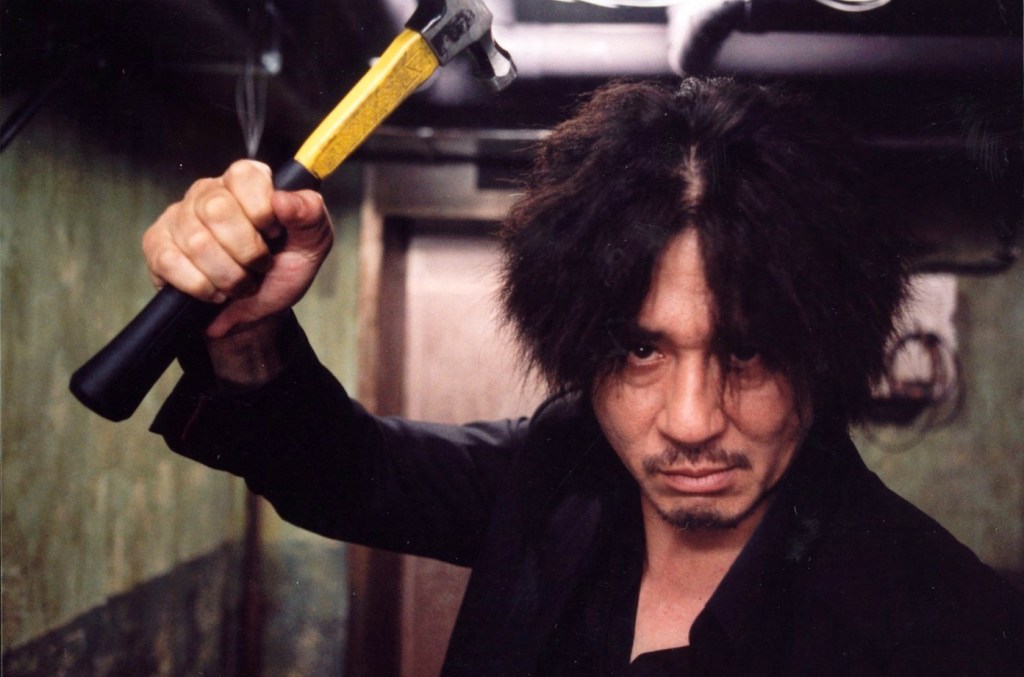
The brutality of the film is often what many people find most memorable, but you may be surprised to hear the film isn’t a bloodbath in the way you might expect. The moments of sickening violence are truthfully few and far between, yet their utilizations are so impactful in making you squirm. The sparse use of violence keeps you from growing desensitized throughout the film, making sure each moment leaves you uncomfortable. There’s several scenes to talk about, but the one that everyone speaks on is the now famous corridor fight scene. Shot all in one take, we see Oh Dae-su take on a small army of henchmen, armed with nothing but his fists and a hammer. The scene is iconic at this point and has inspired other pieces of media like Daredevil and, just recently, Teenage Mutant Ninja Turtles: Mutant Mayhem. Its one-shot nature is certainly a talking point, but what I love the most about the scene is its realism. It’s not a case of our hero absolutely demolishing his way through dozens of baddies. Oh Dae-su gets his ass beat, but he still finds a way to overcome his opponents through bare-knuckle fortitude and improvisation. The scene’s choreography barely feels like choreography, as people trip over one another and haphazardly swing for the fences in a way that feels eerily authentic; less like a dance and more like an actual fight.
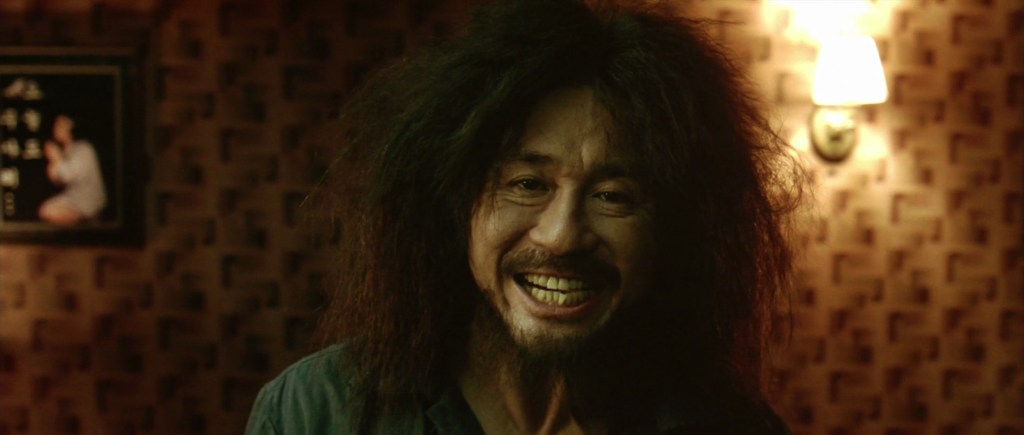
And then there’s the ending, which again, no spoilers here, but it’d be impossible not to mention the feeling it leaves you with. Oldboy has one of the most gutpunching endings that leaves you with a confusion on how to feel. It’s tragic and bittersweet, but also twistedly hopeful in a way that leaves you questioning how you should feel about any of the characters. The Greek tragedy inspirations are heavily apparent, asking you to contemplate the impossible choices for the betterment of the ones you love. There isn’t really a right answer, and I love that about the film.
In short, if you haven’t seen Oldboy, genuinely, what are you doing with yourself? It’s one of the most important pieces of South Korean cinema that holds such a universal appeal, making it easy to get into even if it’s not exactly easy to sit with. Park Chan-Wook’s masterful directing not only makes this a hyper-engaging story of revenge, but its structure also makes it easy to follow and understand if you aren’t as familiar with foreign films. If you’re able to catch it on the big screen during its limited release, absolutely go for it. If not, it’s available to rent on several streaming platforms, which does give you the leisure of rewinding in case the story loses you a bit in its winding mystery. This film, along with Parasite, were my first accesses to Korean film, and believe me when I say this, you are doing yourself a disservice as a moviegoer if you are not dipping your toes into this pool. If you end up enjoying Oldboy, take a look at more of Park Chan-Wook’s work, particularly The Handmaiden and Decision to Leave, the latter of which was my 2nd favorite movie of 2022. Want to go farther, take a look at some other impressive Korean films, the aforementioned best movie of all time Parasite, Train to Busan, Burning, The Wailing, I Saw the Devil, and so many more. If there’s a Korean film you want people to see, be sure to put it in the comments so we can check all of them out.
Rating

Vow of Silence

The Vow of Silence is a bit of a spin on a Negroni, utilizing Korean soju as the base spirit while utilizing a delicate balance between sweet vermouth and bitter aperol. Additionally, a dash of coffee liqueur is included to make the drink a bit more bodied while adding a welcoming, rich pairing to the aforementioned flavors. You’ll find the initial sip to be light and a tad sweet before a bolder, more bitter flavor begins to emerge on the back of your tongue, similar to dark chocolate. This alcohol forward cocktail can be a doozy, so take it’s name to heart before you go spilling your secrets.
Ingredients
- 1.5oz soju
- 1oz sweet vermouth
- 1/2oz Aperol (or other bitter apertif)
- 1/4oz coffee liqueur
- 2 dashes organge bitters
- Rinse: Absinthe
- Garnish: Orange peel
Instructions
- Add ingredients to a mixing glass and stir to chill.
- Spritz or rinse a chilled coup glass with absinthe before straining the cocktail into it.
- Express the oils of an orange peel on top of the drink. Garnish the drink with the peel or discard.
 The Martini Shot