
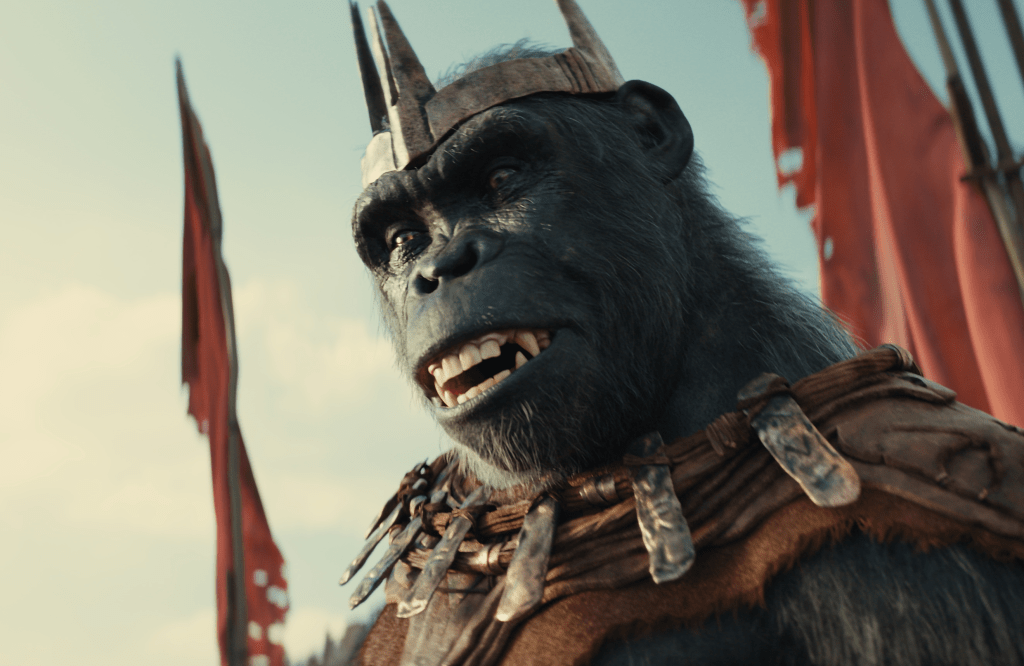
We are onto our third monkey film of the year, this time with the 4th installment in the modern Planet of the Apes series. This is a collection of films I think are highly underrated and should be discussed amongst the big blockbuster names. Not only have these films managed to tell a consistent, engaging narrative across several films, but they’ve also pushed the boundaries of mocap work and special effects. Just look at the hairs on that monkey! I genuinely believe these films are up there alongside Avatar as one of the best uses of modern day CGI.
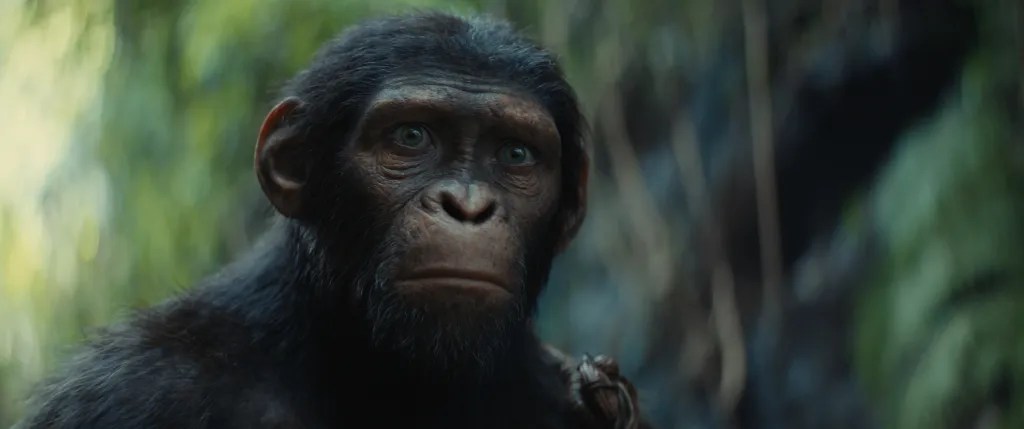
In this fourth installment we are generations removed from the days of Caesar, the patient zero ape that rose to lead his kind to become the planet’s dominant species. Now his legacy and teachings are lost to time, as small tribes of apes scatter the globe, leaving humans a shell of their former glory. Our new primate protagonist is Noah, who sets out on a mission of revenge after his tribe is destroyed, leading him to make unexpected allies and fearsome enemies.
Four films in, and I gotta say this managed to be both consistent and refreshing. Kingdom of the Planet of the Apes is an enjoyable adventure brimming with stunning sights and an exciting outlook for the future of the franchise. While it may not be quite as gritty or meditative as previous films, it still manages to remain consistently engaging while presenting new ideas for the world. It’s a bit long, and its third act stumbles through the finish line a bit, yet there’s enough charm and technical proficiency here that I wouldn’t mind returning for four more.
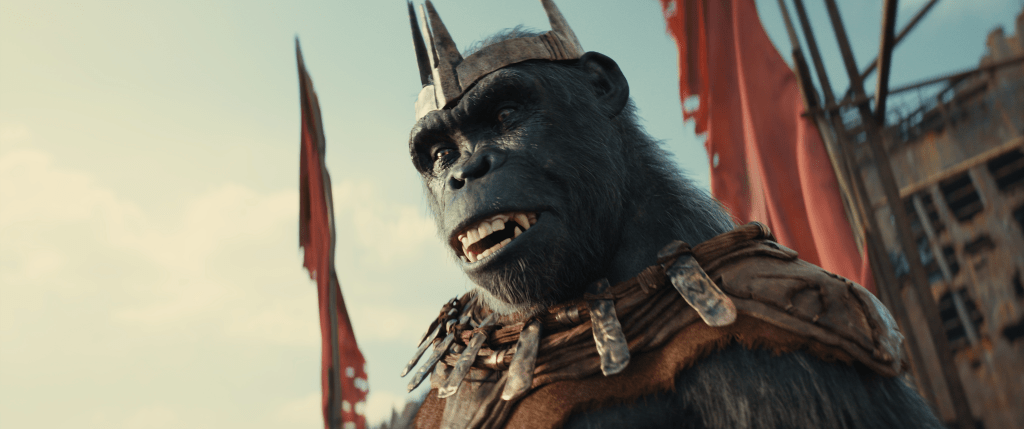
The biggest takeaway of this film for me was how it flips the script of the previous trilogy. In those, Caesar and the apes worked to build up their forces in order to stand against the dwindling but no less dangerous human forces. These are depressing films about war and the last grips of survival, but you don’t ever really not take it seriously despite the fact the most emotionally alluring characters are monkeys. Kingdom jumps far ahead in time to a world where the apes more or less won, and are now seated to begin progressing their civilizations. This opens up a lot of possibilities, such as developing ape cultures, settlements, languages and laws. There is no real agreed upon basis of morality here, as these settlements lack a unifying dogma to live in harmony. That’s not to say that it doesn’t exist though, as Noah comes to learn of the teachings of Caesar through a wise orangutan named Raka. Raka is more or less the sole protector of Caesar’s legacy, doing his best to keep his memory alive and his words true. This becomes rather challenging due to the rise of Proximus Caesar, an ape that has ascended to idol status through his manipulated teachings of Caesar’s beliefs, adopting his name and doing what he can to erase those that could dare challenge his words. Weaponizing religion for personal gain? They really are just like us.
Humans are now at the bottom of the food chain, with most regressing to a feral, prehistoric mindset. Yet some still live to carry on the knowledge of the past, such as Mae, a human girl who ends up joining Noa and Raka on their travels. This presents an interesting dilemma between man and ape, as coexisting seems to remain a rocky subject. Humans are adamant about reclaiming their world, but apes aren’t so jazzed about giving humans anything but an inkling of power, lest they wind up in cages like the before times. While the film overall has an optimistic tone to it, it also continues to ring true the themes of the previous films, where it is unlikely that there can be two dominant species on the planet.
Just like past films, the special effects are absolutely gorgeous, crafting a believable world of simian supremacy. A lot of care was done to give the apes identifiable looks and traits, from their speech patterns to the way they walk. The motion capture is seamless, instilling humanity into the characters while never betraying their ape anatomy. The performances manage to shine through while still feeling authentic, with some absolutely stellar character work at play here. Kevin Durand as Proximus has got to be the standout for me, establishing a magnetic presence that can be jovial yet always sinister. What is adamantly apparent is how well the apes exist in the settings. Using a mixture of real locations and CGI backdrops, you never feel that separation between reality and fabrication. Things like how the apes traverse the trees or run through water are crafted with intense detail, making sure every moving leaf and every splash of water is constructed believably. But this doesn’t keep the film from getting energetic with its camera work. There are several sequences of continuous takes and frenetic camera movement that help keep things exciting.

Yet, it’s not all monkey madness here, as the film is actually quite meditative and patient…maybe too patient. It’s not afraid to slow things down and let you soak in the beauty of the world or the moral conundrums the film poses. My main issue with this is that a lot of it takes place in the third act, where it follows a relatively quick paced first and second act, which really takes the air out of the story in my opinion. The consequences of progress and what it may mean for human-monkey relations aren’t really brought into the fray until we’re nearing the end, which in turn, makes the earlier portion of the film feel a bit disjointed from the end result. It really kind of sweeps its meditations on the corruption of history to the side to give us the still intriguing quandary of “what if monkey had gun?”. That concept in itself isn’t a bad thing and actually leaves you believing history is doomed to repeat itself no matter who is at the reins, I just wish I felt that throughout the film and not just at the end. With the series’ longest runtime at 145 minutes, there’s definitely room for refinement to condense these ideas into something a bit more focused.
With that being said, Kingdom of the Planet of the Apes managed to be a solid summer blockbuster that actually gives you something worthwhile to chew on. It continues the series’ legacy of stunning VFX and apocalyptic wonderment, yet still manages to feel fresh through its newly established world and hierarchies, along with their implications. It runs a bit long and loses its footing a bit by the end, but I can still say with confidence that this is one of the most consistent modern franchises we have right now. I wasn’t lying about wanting four more of these either. Give me monkeys in a newly feudal Japan, have them fight the Predator, who cares; go bananas.
RATING

PROXIMUS CAESAR

What a wonderful day! Aren’t we grateful to be living in a time where our gracious ape overlords allow us to enjoy a sweet treat for the summer? Named after the pompous villain of the film, the Proximus Caesar is essentially a boozy banana smoothie given a bit of richness thanks to coffee liqueur, as well as a bit of burn thanks to two different rums. Simply throw the ingredients in a blender to create this great achievement in ape advancement! Now is the time to return to monke.
INGREDIENTS
- 2oz rum
- 1/2oz overproof rum
- 1.5oz coconut cream
- 1.5oz coffee liqueur
- 3/4oz lime juice
- 1/2 banana
- Garnish: Mint sprig
- Garnish: Caramelized banana slice
INSTRUCTIONS
- Add ingredients to a blender along with 1 cup of ice. Blend until smooth.
- Pour into copper julep mug (or regular cocktail glass if preferred).
- Garnish with mint sprig and caramelized banana slice.
 The Martini Shot