
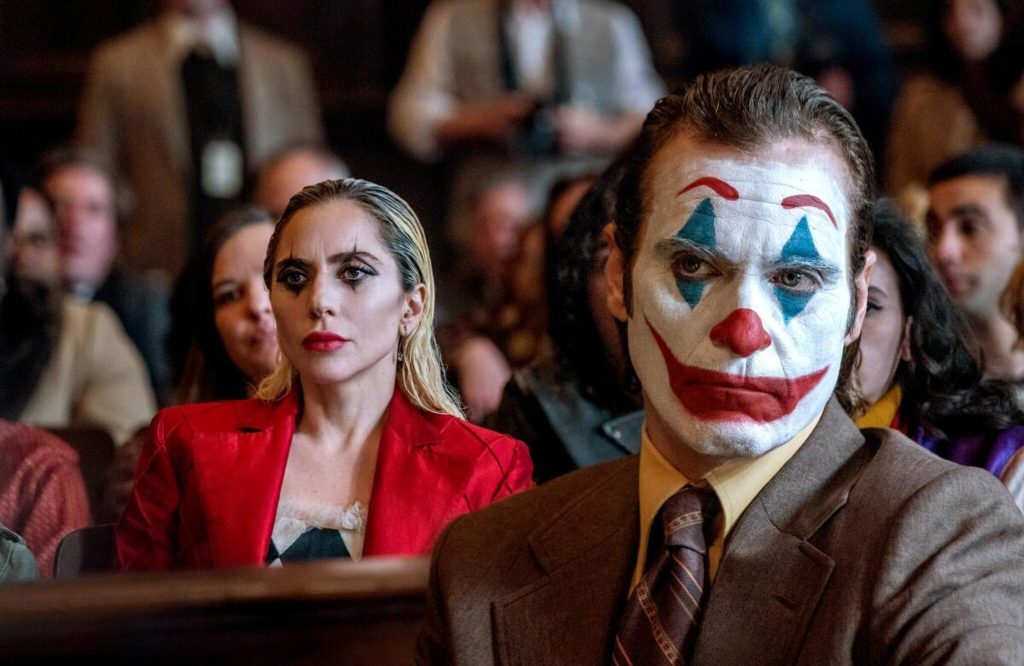
Since starting this channel in 2020, I have had a lot of people ask me my opinion on Joker, the 2019 box office success that actually had people worried it was going to radicalize incels across the country. What a silly time to be alive. My opinion on the film has changed bit by bit over the years, and right now my feelings are fairly mixed. I do love Joaquin Phoenix and think he does an admirable job, and I won’t lie, I think director Todd Philips definitely knows how to design some compelling shots. Yet I never really connected with the central ideas of the film, finding most of the reflections on mental health, classism, and accountability to be fairly surface level. It’s doing leagues more than what most super hero films were doing at the time and I respect it for that, but I also didn’t find myself judging it as a comic book movie because other than it loosely being connected to the Batman mythos, it’s purposefully not trying to be a comic book movie. The Scorcese inspirations are clear, mostly Taxi Drive and The King of Comedy, and while I can’t fault Philips for drawing from both their plots and themes, I just didn’t think he did anything all that interesting or different with them. I totally get why people love the film and I don’t fault them for enjoying it, it just didn’t do much for me.
With that said, I was very interested to see that the sequel was willing to take some big swings. Making the film a musical was certainly a choice, and one I was highly anticipating to see: 1. How it would play out and 2. How audiences would accept it. So let’s take a look at that box office and- oh no.
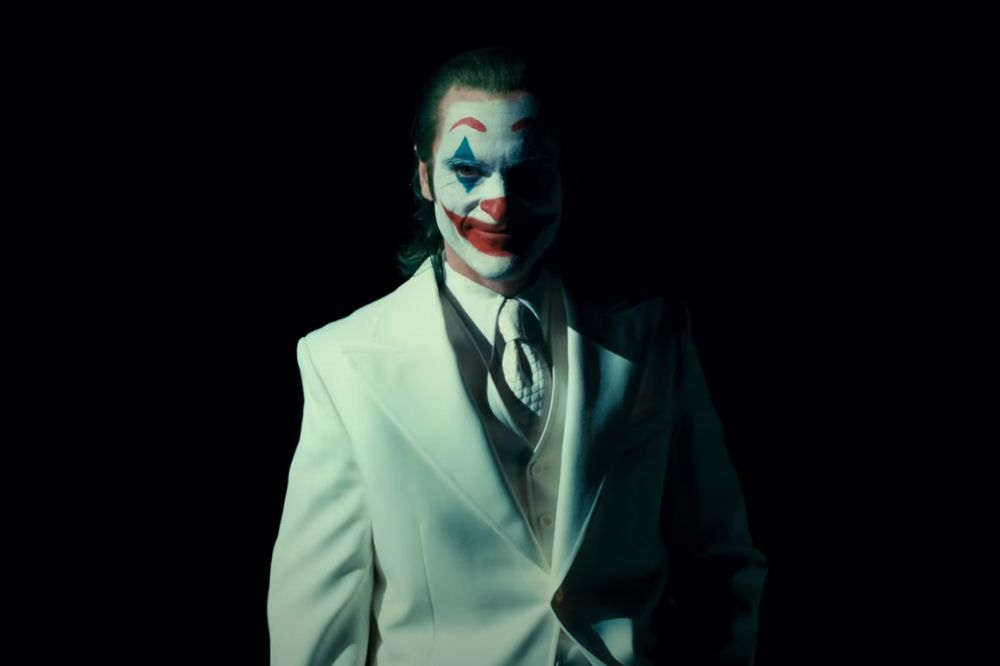
Conceptually, I love what Joker: Folie a Deux is trying to do. Not only is it a musical but also a courtroom drama, further distancing itself from the comic book movie formula we’ve seen again and again. Not only that, but it’s even challenging the previous film itself, putting its own themes and messages on trial in a way I think a lot of people genuinely need to hear. It expands the complexities of the previous film’s ideas that elevates them beyond the surface level feelings I had. So, in theory I like what the film was going for; the execution is a different story. For a musical, I found it to be rather inconsistent and sometimes bland, with a lot of the musical moments falling a bit flat on emotion and presentation for me. As a courtroom drama, I found it to be missing the compelling tongue that turns other films of its nature into bouts of linguistic warfare. By the end, these elements didn’t do a ton for me to make me connect with the characters like the film was probably hoping. Credit where credit is due, I do think this sequel feels wholly more original than its predecessor, but that could be a good or bad thing depending on who you are.
Two years after killing six people, Arthur Fleck is about to stand trial for his crimes as the enigmatic Joker. While incarcerated, he meets an obsessive patient named Lee who quickly forms a romantic connection with him. With his lawyer urging him to reject the Joker iconography and Lee encouraging him to embrace it, Arthur must stand trial and try to defend himself with the threat of execution looming over his head.

Phoenix is once again transformative and hard to ignore as the titular clown, bringing much of the same tortured yet boisterous personality from the previous film. The Joker side of Arthur certainly gets more time to shine this go-around, which does give us the one thing I feel every Joker needs; he’s gotta be a little funny. So when Arthur is doing his best Foghorn Leghorn impression, I did find him to be magnetic and confident, with the confidence being what makes these scenes pretty funny even if the things he’s saying aren’t really. As Arthur, I still kind of feel the same about his characterization as I did the first film. He’s kind of this caricature of suffering that’s so maxed out that he never really feels like a real person. I can empathize with him because of the way he gets treated, but I just don’t really see a human beneath it all, moreso a conduit to represent those issues.
Arthur is now joined by a zealous admirer in Lee, portrayed by Lady Gaga. Gaga has really surprised me with her roles over the years, from A Star is Born to House of Gucci. She does quite an admirable job here, playing the devil on Arthur’s shoulder that is infatuated by what the Joker represents. That being said, I did find the character to feel a tad underdeveloped, mostly because she felt less like a character to explore and rather a tool to guide Arthur along on his journey. I thought she had far more potential as a character, with her being a compulsive liar who idealizes the things she wants even if she doesn’t accept them fully for what they are. I was kind of hoping she would have a bit more screen time to match Phoenix, and while we didn’t get that, she still manages to be a scene stealer. I don’t think her take on the iconic character will have the same staying power as Phoenix’s did, but I do applaud her for trying something different, even if it made me wonder what the whole point of these films being based off the comic book characters is.
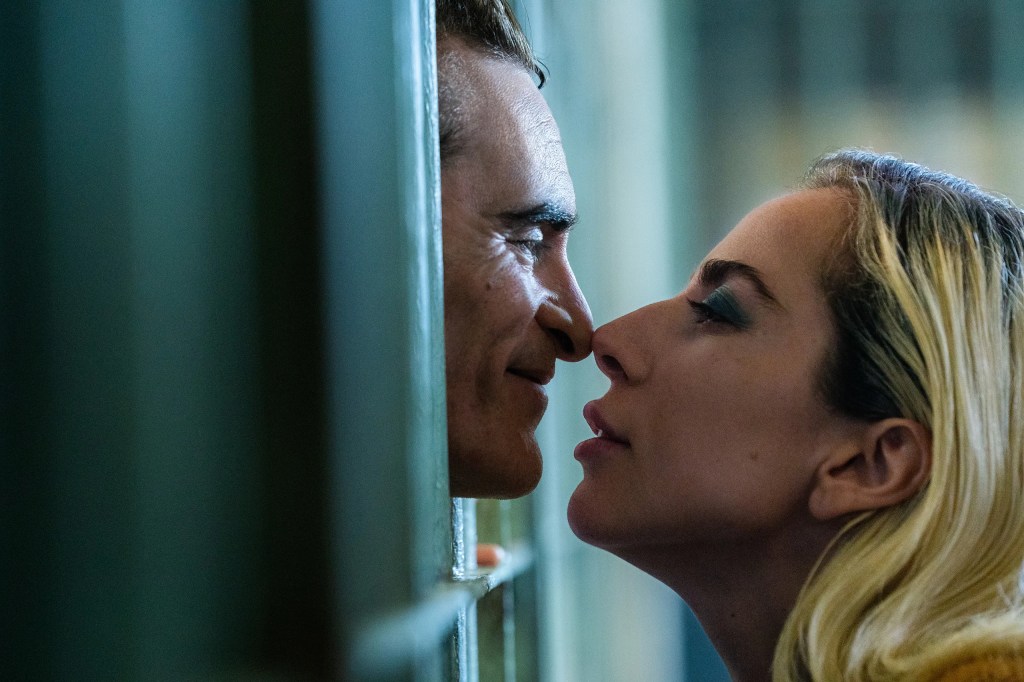
When the musical sequences got underway, I couldn’t help but realize how bleak and cold those moments were going to be. Contrary to what some may think, musicals aren’t always these bright, happy-go-lucky tales told through music. Often, music and singing is used to poetically express what characters are feeling in a way that simple talking can’t do justice. The film’s musical sequences don’t always tend to be loud and grandiose, often being rather restrained and grounded. It almost feels like it wanted to be the antithesis of what we know as musicals, much like how the first film tried to be the antithesis of the comic book movie. But I mostly just found a lot of the sequences to be rather dull, lacking the heartstring tug or the impressively designed structuring I look for in a musical. Every now and then we get something great, like a sequence involving Joker singing in the courtroom while killing those who are trying him, but more often than not I found these scenes to be flat and uninteresting despite me liking quite a few of the song choices. Who knew there were so many songs about clowns?
I mentioned earlier that I thought this film was a dressing down of the first film’s themes, or at least how many people interpreted it. To me, the first film felt like it was trying to be a rallying cry to bring mental health and the society that bludgeons it to the forefront, but never really got passed anything deeper than “be nicer to each other.” While the first film didn’t exactly vindicate Arthur of his crimes, it didn’t really place accountability on him either, framing him as a product of a failed system. But in Folie a Deux, there is way more of an attempt to really dissect personal accountability and the cult of personality that is bred from Arthur’s actions. There is a genuinely great scene where Arthur interrogates a former friend of his on the stand who also has lived a very rough, neglectful life. He watched Arthur turn into a monster before his very eyes, scarring him deeply. Arthur was wronged but he had no right to do what he did, and his friend is proof that you can only blame society so much; you are still the one in control of your actions at the end of the day. This is fantastic and actually makes a difference in how Arthur goes on to see himself. Narratively, this film had way more thought provoking ideas to indulge in, and while they don’t come together in the most satisfying of products for me, I still respect it for making the effort.
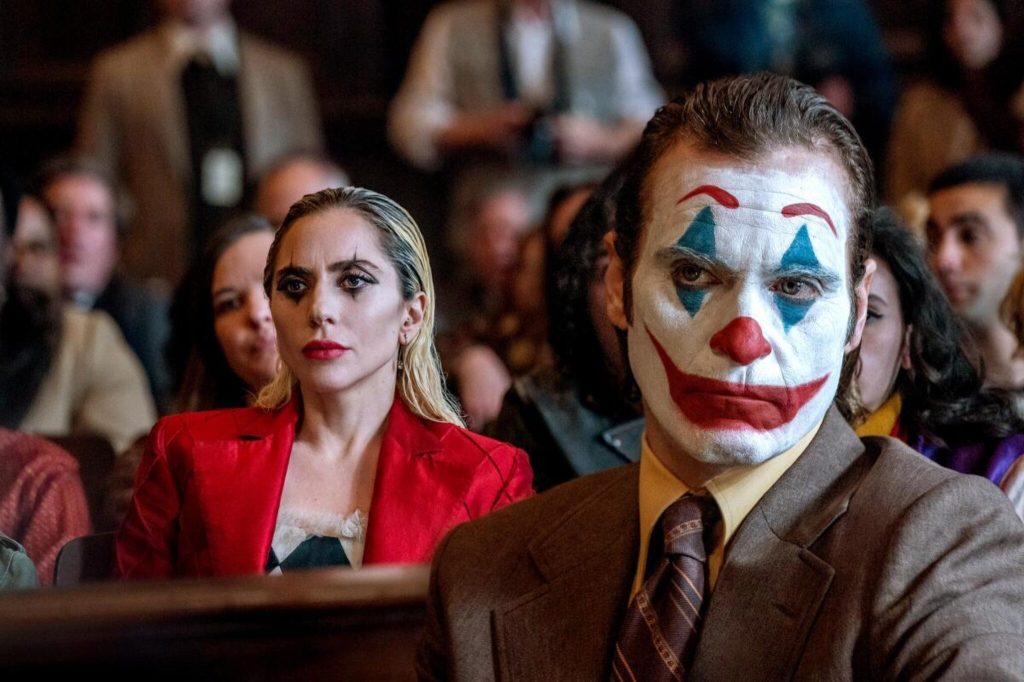
Joker: Folie a Deux looks to test many people; fans of the first film, comic book fans, musical fans, but unfortunately I didn’t find the test to be as inward or compelling as I would have hoped. There are props to give Todd Philips for taking the film in a different, potentially alienating direction, but I’d be lying if I said it had me floored throughout. At times feeling frictionless and uncompellingly drab, this sequel denies viewers the same straightforward pleasures that probably made the first such a hit. Even with solid lead performances, a very well colored and composed visual style, and a solid soundtrack, this didn’t really give me the emotional resonance I would have liked. The first Joker will stay in my mind for better or for worse, but even with its small improvements, Folie a Deux feels like it won’t be leaving the same lasting impression. It certainly takes more risks than anything Marvel has done in years, but where those are straightforward, simple films that more or less succeed at achieving that, this tries to be something deeper that I don’t really think it accomplishes.
RATING

A HAPPY FACE

When you smile, the whole world smiles with you. And when you drink, you hope everyone else is drinking so they don’t notice the fool you’re about to come. A Happy Face incorporates the Joker’s iconic color palette into a bright, tart riff of a rum sour that also hides a tinge of chocolate underneath. The addition of a strawberry on smile not only pairs great with the other fruit and dessert flavors, but it also gives the cocktail a wicked look to it.
INGREDIENTS
- 2oz rum
- 3/4oz orange juice
- 3/4oz lemon juice
- 1/2oz creme de cacao
- Dash: Blue curacao
- 1 egg white
- Dusting: Strawberry powder
INSTRUCTIONS
- Add ingredients to a shaker and dry shake (without ice) for about 20 seconds.
- Add ice and shake to chill.
- Strain into coup glass.
- Using a smile shaped stencil, lightly dust strawberry powder on top of the cocktail.
 The Martini Shot