
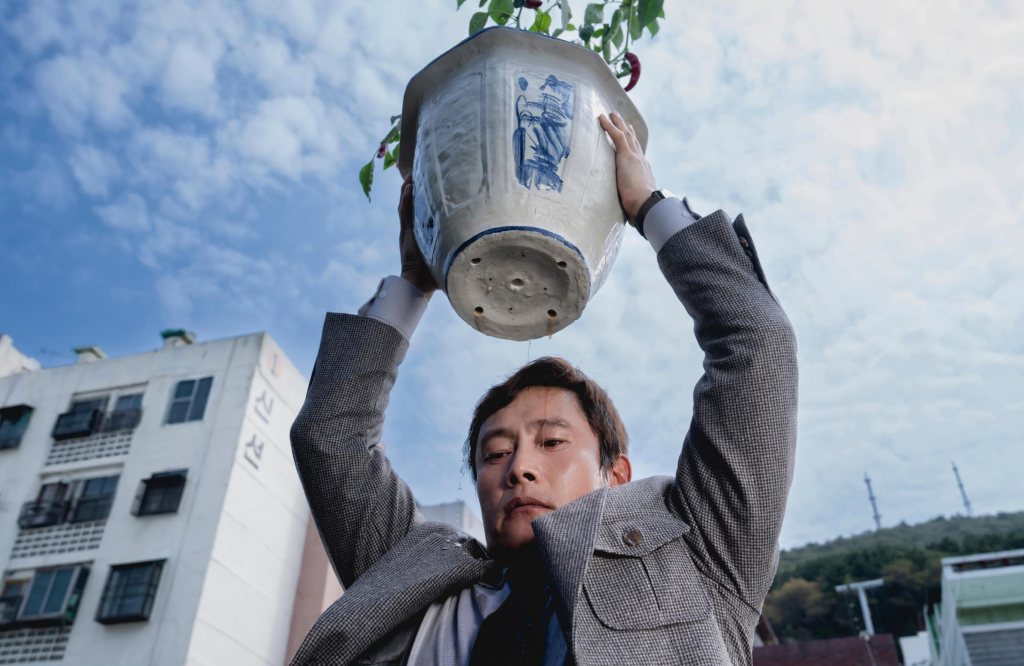
I’m sure a lot of you already know this, but the job market sucks. Times are a’ changin’, what with prices on the rise and new technologies being developed that will minimize the amount of human workers one may need. But even before that, the job hunting scene was already becoming more and more challenging. Getting an interview became less about credentials and more about the correct buzzwords you include in your resume. It’s certainly a tough time in a global culture where your worth and value is often defined by what you do for a living, or at least that’s what the voices of doubt in my head tell me. As someone who has been a full-time freelancer for over a year now since being let go from my post production job of three years, I can at least take solace in the fact that I am not alone in this challenge, as I felt incredibly seen in Park Chan-wook’s latest outing, No Other Choice. There isn’t as much murder in my situation, but give it time, and I’m sure we’ll get there.
Park Chan-wook has been a monumental force to come out of South Korean cinema, whose works have continued to reflect the growing change and metamorphosis of not just his home, but the greater world around it. Much like his contemporary Bong Joon-ho, Park’s focus on the failings of society have taken on many different forms, but most if not all still carry a dark humor to the tragedy, because sometimes all you can do is laugh at the overwhelming odds continuing to be stacked against you. But No Other Choice is perhaps the funniest the director has ever been, choosing to tackle the rising improbability of today’s job market and the hypothetical (hopefully) means one might have to go to in order to secure their future. But where many directors may have stopped at the simple “job market sucks” commentary, Park delves deeper to not only look at the society that structures such an uncertain world, but the role the individual plays in it as well. And thankfully, much like his other films, this dark farce is told through a highly memorable and creative visual language, from intention riddled framing and blocking to reminding us there’s more interesting ways to transition to the next scene then we may remember. Highly hilarious but aggressively poignant, this was one of those movies I really needed to see right now. I would have liked to have seen it before the end of 2025 to include it on my year end list, but hey, that’s just the way the paper crumbles.
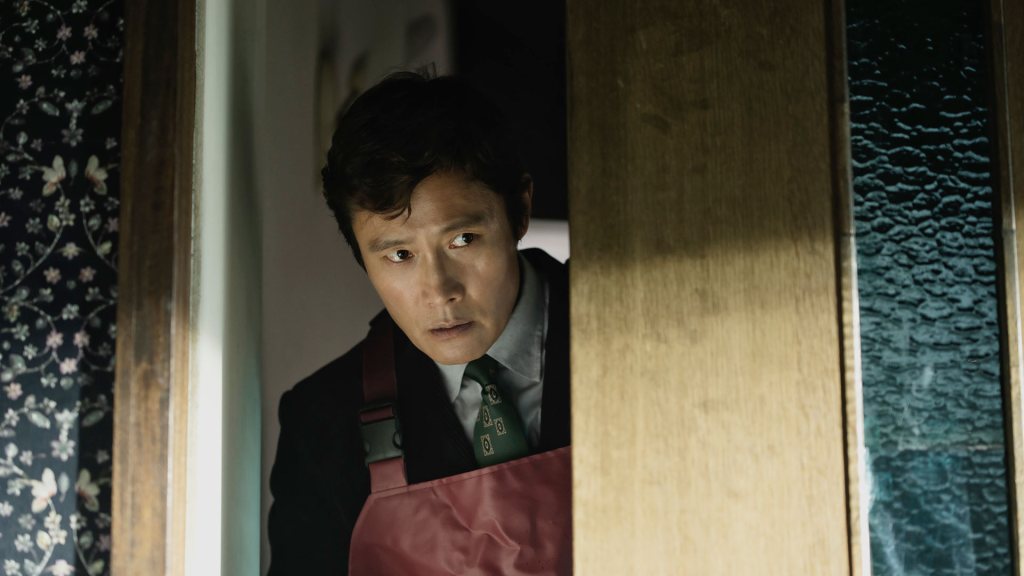
The film follows Man-su, an accomplished veteran of the paper making industry that has done seemingly everything right, and yet he now finds himself on the unemployment line. Now his and his family’s home and social status are at risk, and Man-su realizes that the unemployment line, especially for his industry, is a long and competitive one. With many slightly more suitable candidates standing between him and a new paper company, Man-su comes to the obvious conclusion of how he’s going to get ahead; simply remove the competition. Would that it were so simple, however. After all, Man-su isn’t just some murder-happy psychopath who sees his competition as hurdles rather than people. And yet, with his future rapidly slipping through his fingers, he proceeds to dig himself into an impossibly deep hole that may not bear the fruit he had hoped for.
Man-su, played expertly by Lee Byung-hun, is a man in panic mode. He’s devoted his life to the world of paper; not the most glamorous or flashy lines of work, but that’s not how he sees it. He justifies that paper is a fundamental backbone to society; it creates our literature, our money, the tools to wipe our ass. Of course, this truth was probably more evident two decades ago (I hear bidets are becoming more prevalent) back before the world put both feet into the digital world. But the conclusion he draws is that paper is all he knows; it’s all he’s good at. Never mind the fact that he owns a bustling green house that contains many intricately potted and cared for plants, where he spends much of his free time. But plants don’t get you fresh eel delivered to your house from your higher ups. He’s got appearances to keep up; a big house, two dogs, a musically talented if not socially stunted daughter, and a wife he prides in spoiling with dancing classes and new shoes. And without his paper job, all of that threatens to go away. Man-su’s entire drive towards contemplating murdering any competition that stands in his way is based around this image of himself, and anything outside of that established norm is not an option.

I see a lot of myself in Man-su. Not so much in his willingness to off the competition, but his stubbornness to believe that there is no other choice. There were times (and there still are some) after I was laid off that probably should have put more effort into pivoting my work trajectory away from an industry that wasn’t super keen on handing out new opportunities. There was a lot of coasting off of unemployment until that one, perfect role similar to what I was doing prior came around, only to realize it probably never was. And I get why Man-su struggled with doing the same. It can be a lot to walk away from an industry or line of work you’ve devoted a large chunk of your life to. There’s the familiarity of it all, or maybe the latching onto that old-age norm where you stay in the same line of work, potentially the same company, all your life. Like it or not, that’s not the norm anymore, and it’s a jagged pill to swallow. This can especially be hard to accept when you’re in the role of breadwinner, yet the relationship between Man-su and his wife Mi-Ri, played by Son Ye-jin, is an important one to see.
Man-su reads immense disappointment on her face as she makes plans to cut back their spending and give up many of the luxuries they’ve grown accustomed to while he continues his search for a paper job. It gets to the point where Man-su even grows hostile to this, believing she’s shacking up with a hot, young dentist to fill the void he’s been unable to keep. The flaw in this belief is that Mi-Ri’s disappointment doesn’t stem from his unemployment, but rather how he handles it. Her suggestions for saving aren’t used as a metaphorical knife of guilt to twist Man-su with, but as a way to help Man-su get back on his feet. Sure, she’s disappointed in this reality, but she doesn’t hold it against Man-su. She even brings up different avenues of work he could try, but of course, there’s only one place the paper man even though his passion for the industry stems from circumstance rather than any real love. It’s this patience and understanding that I saw in my own wife after my termination, and it’s something I need to recognize that I take for granted more than I should be allotted to do so.
There’s this continued trend I’ve noticed in Park’s work, and that revolves around parallels and reflections. I was reminded of the protagonist of Oldboy, who reshaped himself by becoming a reflection of things he saw and heard while in confinement, from fighting styles to simple phrases. A similar trend is seen here, where Man-su portrays a reliance on repeating things, whether they be from his own mouth or the mouth of others. He’s constantly writing phrases, bullet points, and ideas on his hands so that he can repeat them later. Additionally, he parrots sentiments he hears from others in similar positions, possibly almost as a means to justify his own stance. Maybe it’s because he doesn’t have the words to express how he feels, or maybe it’s because he doesn’t truly believe his own reasoning and sees these external sentiments as validations for his own confusing feelings. There’s a similar parallel seen in his daughter, who only really talks to them in regurgitations of words that were spoken to her. Admittedly, I’m still working through what that all means as a greater whole, but it was something I feel needed to be addressed.
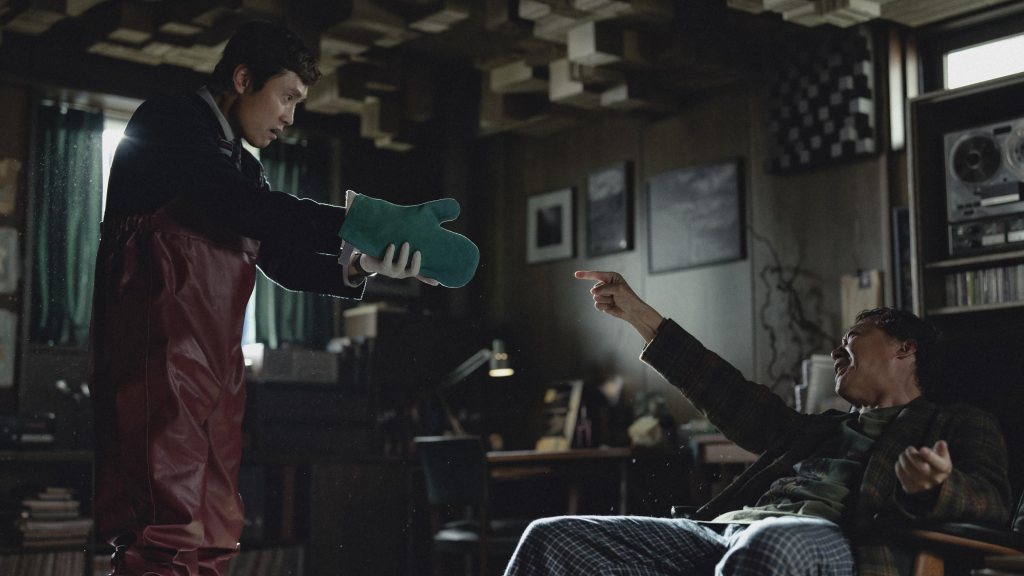
Okay, enough dissecting. Let’s look at some of the technicals and structuring that made me love this so much. Firstly, Park Chan-wook is simply crafting films in ways directors in America wouldn’t seem to dare. Seriously, if you tried to make a film that looks this good and is this playful with its editing and storytelling, someone from the Academy would kill you. Everything is so meticulous and intentional, always finding ways to elevate even the most simple of scenes to maximum artistry. But there’s a genius behind these eclectic touches, as they’re not thrown in there to simply grab your attention like a set of jingling keys. Much like his prior film, Decision to Leave, the whole viewing feels like peering into a kaleidoscope puzzle box. There’s a fundamental necessity to each transition, split diopter, and altering of reality, truly lifting the words off the page and making them become one with the visual medium. Speaking of the script, this is easily the funniest and tightest outing from the director that I’ve seen so far. The runtime never weighed heavy thanks to a constantly tense and hilarious story that never refrains from digging deeper holes. But there’s always a bit of levity even in the darker moments. The snake bite scene and the stand-off over loud music is worth the price of admission alone.
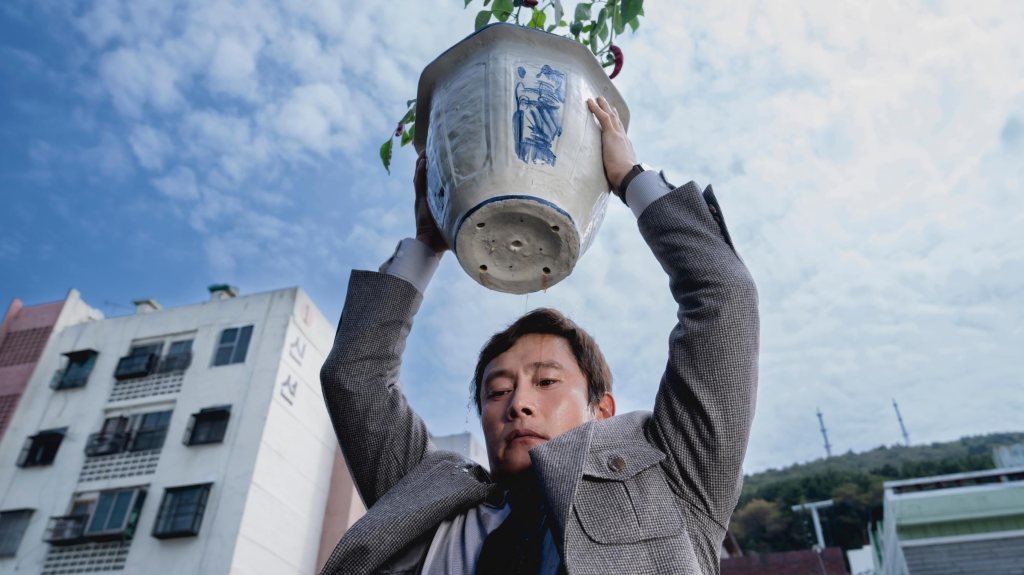
The movies that stuck with me the most from 2025 have reflected the current state of the world in a way that feels both unifying and yet also bleak. Without spoiling anything, the ending to this film is a bitter sweet warning of where the future may be headed, anchored by the crushing weight of a system that hasn’t and wasn’t designed to protect the little people. Sure, there will be victories from surviving and maneuvering this scary, changing world, but at what cost? Will anyone be there to celebrate them with you, or is the security of your own unit the only thing that really matters? At the end of the day, No Other Choice is a reminder that there really are other choices. They might be uncomfortable and come with a ton of growing pains, but there is a necessity in them that cannot be denied. But even if you don’t want to envelop yourself in all that possible dread, this still remains as fun as it is poignant and further proof of Park Chan-wook being one of the greatest cinematic voices in the game today. And until my job eventually gets replaced with a robot that’s more efficient than I’ll ever be, I’ll never stop recommending the movies I love to whoever is willing to hear them.
RATING

 The Martini Shot
One thought on “No Other Choice – REVIEW”