
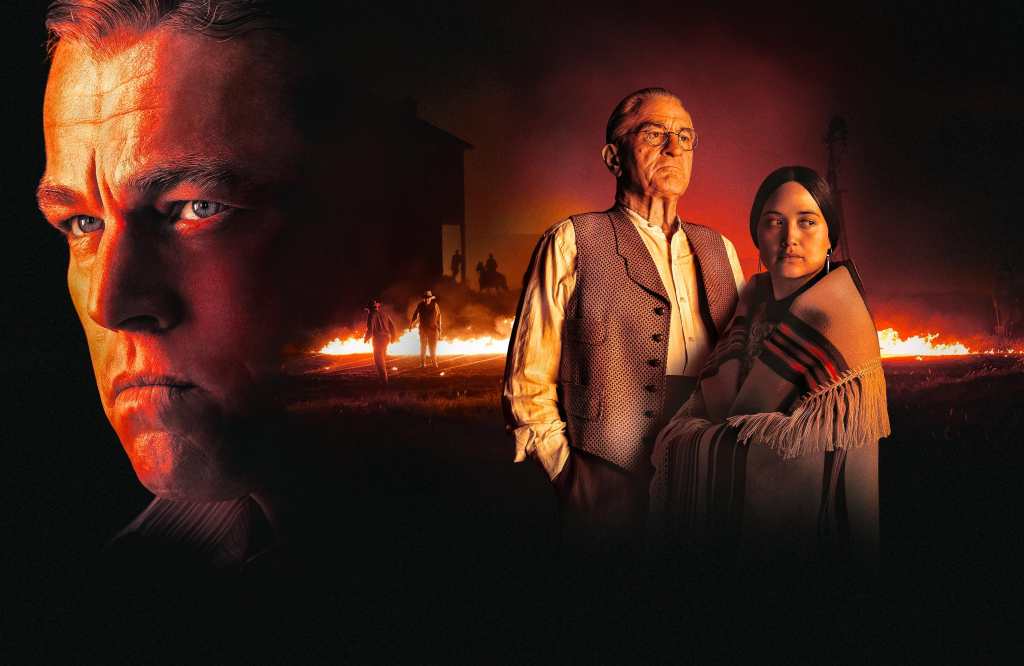
I had been wanting to talk about this film for a while, but wanted to wait until the spooky season had passed so it would feel a bit more appropriate. But in the meantime, there’s been plenty of discussion around this film. Is it too long? Is it too woke? Is there not enough jingling keys to keep the youth’s attention? Well, we’re gonna touch on all of that, but first, a brief rundown. Killers of the Flower Moon is a crime drama directed by legendary filmmaker Martin “Sykes” Scorsese, which focuses on the true story of Osage Nation murders that took place in 1920s Oklahoma. Essentially what had happened was the Osage Native Americans were systematically picked off in order for a bunch of white folk to inherit or steal the wealth the tribe had accrued since the discovery of oil on their tribal land. The film is primarily told from the perspective of a man named Ernest Burkhart, who married an Osage woman named Molly Kyle in order to secure her family’s headrights. In collaboration with his uncle, William King Hale, Ernest goes on to participate in the depraved murder of the Osage people while the people around he claims to love suffers.
First, let’s talk about Marty. Casual viewers may know him as the mob movie guy or the archenemy of superhero movies. Those are only bits and pieces of the man however, as Scorsese’s impact on film reaches far beyond that. While yes, he’s most likely know for his bombastic critiques of organized crime and toxic masculinity with films like Taxi Driver, Goodfellas, Casino and The Wolf of Wall Street, his expertise goes far beyond that niche. He’s covered dark comedy in The King of Comedy and After Hours, horror films like Cape Fear and Shutter Island, as well meditations on religion in the veins of The Last Temptation of Christ and Silence. Needless to say he’s an expert in his craft, delivering some of the most influential films of the last few decades while continuing to champion film preservation and the fight to keep art over profit in the industry. He truly is a one of a kind legend, and it’s a bit sad to think we may only get a few more films from him. So in case you haven’t really picked it up, I really enjoy his work, and Killers of the Flower Moon is no exception.
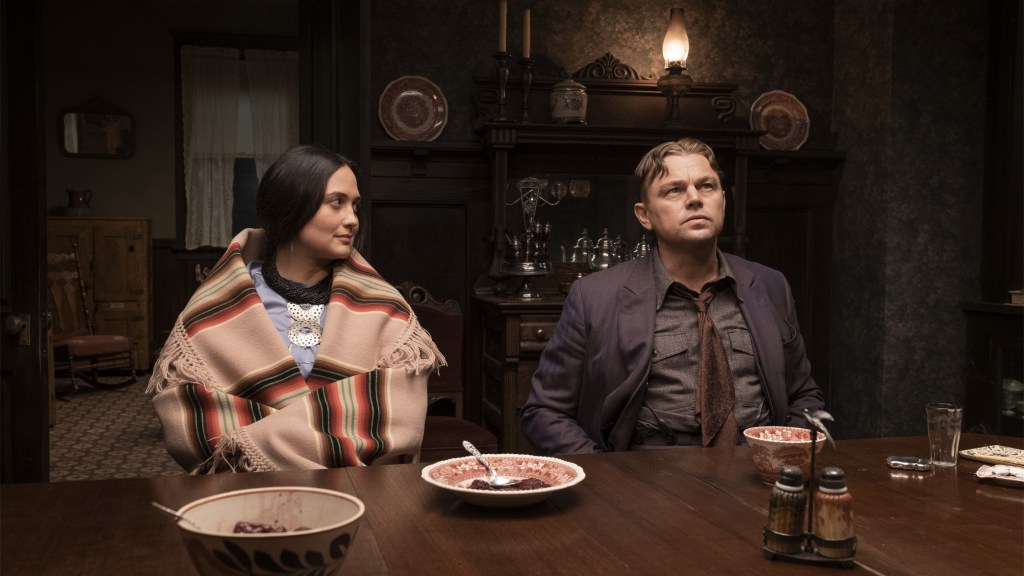
The film is more than just another crime thriller. It’s an examination of corruption and evil, and how both can be left to grow and infect due to ignorance and apathy. It obviously speaks on the nation’s relationship with its native people, while also offering a level of reflection and catharsis for not only our consumption of tragedy in the form of content, but potentially Scorsese’s own hand in enabling that. On a technical level the film is nearly unparalleled, with so much care going into every shot, every scene, and every bit of dialogue spoken, while the performances nail every bit of blunt realism and artistic nuance that’s needed from them. While I do have some issues with the presentation and direction of this kind of story, it’s still a damn fine film, definitely one of the best of the year. Maybe even the best?
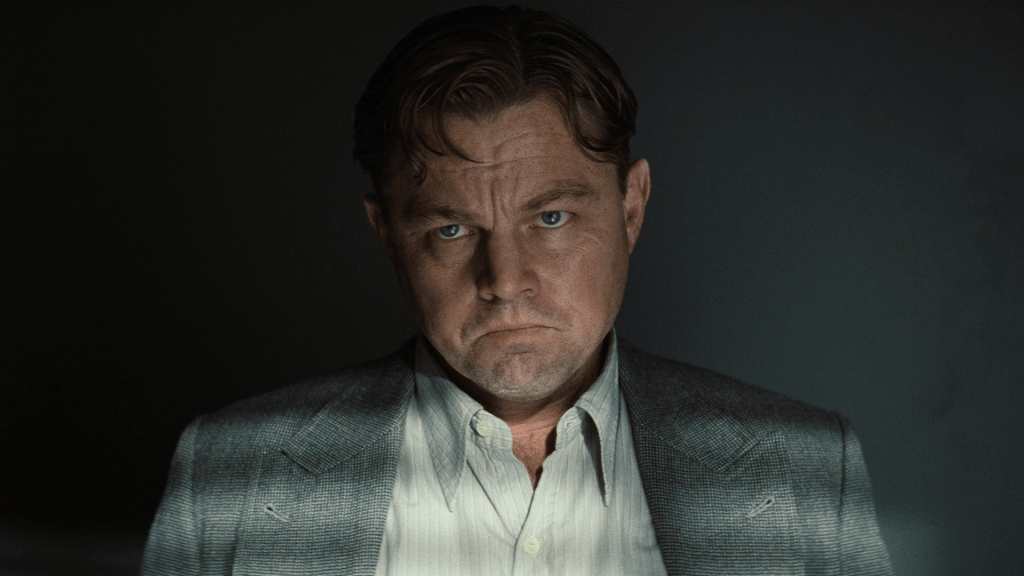
Really, I shouldn’t be surprised when a film including both Leonardo DiCaprio and Robert De Niro turns in fantastic performances, but here I am being blown away by some of the best thespians of past and present. This film made me realize my favorite DiCaprio performances aren’t when he’s a Hollywood heartthrob or a maniacal psycho, but when he’s just a straight up idiot. There is quite the balance of stupidity and loathsomeness to DiCaprio’s Ernest, embodying someone who’s easily manipulated but no less guilty for the crimes he ends up committing. Some people have made an argument that the film attempts to have you sympathize with Ernest which, let’s be honest, is a criticism Scorsese has had to deal with nearly his entire career. I don’t think the film intends for you to sympathize with him, but to see the humanity in him; the fallibility. It grounds the character to real life and gives a glimpse at some of the true catalysts behind evil deeds. It’s not always simple good and evil, black and white occurrences that are so easy to believe in. Ernest does plenty of bad things; robbery, conspiring murder, secretive drugging, not because he’s this simple cartoon villain. He’s spineless, easily malleable, and terrible at following directions. It’s these faults and weaknesses that drive him towards committing heinous acts, even though deep down, as a person, as a human being, he knows they are wrong. So sympathetic? No. Layered and reflective of real life? Darn tootin.
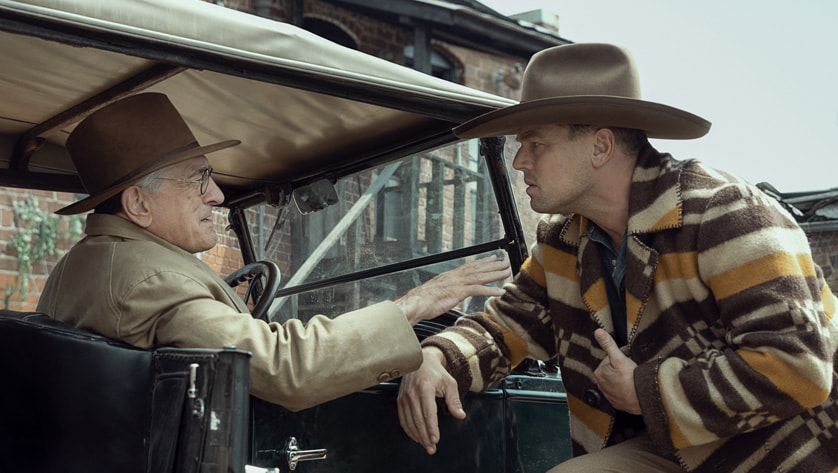
But hey, if you want some evil, look no further than Robet de Niro’s “King” Hill. His performance is something vial, weaving a putrid web in such a non-cholant, inviting way. De Niro has so much presence here, easily turning in one of the best performances I’ve seen from him in a long while. He’s a mastermind driven by the less layered addiction of greed, but the way he juggles his seemingly genuine affection for the Osage people with his ready and willingness to have each one of them killed is compellingly haunting. All these decades later and he’s still finding ways to surprise me, only this time with his performance and not pumping out another kid at age 79. There’s a couple of smaller standout performances that get a little time to shine as well. Brendan Fraiser comes in like a goddamn atomic bomb in his brief but memorable appearance, while other performances from Jason Isbell, Cara Jade Myers, and William Belleau all bring a little something special in their own right. But the performance that I, as well as most found most impactful and surprising was Lily Gladstone as Mollie Kyle. Not exactly an unknown but certainly new to me, Gladstone is an emotional force in such an underexpressed and honest way. She is essentially the conduit to which we experience the heartbreak and turmoil that came with the Osage murders, and Jesus does she sell it, even without any real loud or overexposed moments. Witnessing her world be stolen while the people she thought were her allies plot her undoing in the shadows is a lot for someone to express in her performance, but Gladstone handles all of this in spades, emanating an energy that dominates every scene she’s in. Many, along with myself, honestly wish we had gotten more of her, or heck, the film should have ultimately been from her perspective. I have a guess on why that is the case, which I’ll touch on a little bit later.
The film sits at a heaping 206 minute runtime, and if you’ve been watching my channel for a while you know I’m a bit of a stickler when it comes to runtimes. Yet not a minute feels wasted here, due in part to impeccable narrative pacing and ever engaging editing thanks to Scorsese alum Thelma Schoonmaker. The length never really dwells on you until it’s over, where I was left shocked that I was sitting there for 4 hours. I’m not kidding, this moved so briskly and remained consistently engaging throughout, with enough balance in variety to keep things interesting. There’s a bit of humor, which never really felt out of place or undercutting the serious nature of the film. There’s a bit of shocking violence, but it’s used where it’s needed, never feeling gratuitous or shock for shock’s sake. There’s the quiet, meditative moments where you just have no choice but to take everything in, not just from a story perspective, but also just for the pure technical grandeur on display. The sharp, imposingly muted tones of the white folks’ clothing are combated by the colorful expression of the Osage attire, while even the dusty, sprawling backdrop of Oklahoma pastures manage to pop. The entire film is just one well oiled machine with no slip-ups, no cracks, no hiccups. It’s astounding that Scorsese is able to operate on this kind of level decades later. Like him or not, he is one of a kind and his work absolutely deserves the artistic praise it’s gotten.
So, the elephant in the room that many have brought to attention with this film. Why is a movie about the heart wrenching tragedy of one of America’s most marginalized people being told by someone not from that group of people? This is a completely fair criticism, and I think Scorsese knows this. This would explain the controversial yet understandable decision to place the perpetrators of this horrible moment in human history at the forefront of the story. It’s truthfully the only version of this story Scorsese could tell in the way that he does. Now, would it be more fitting to have someone more closely linked to this history tell this story? I think so, and that’s where my main critique of the film stems from. At times it does feel like the Osage and their tragedy are used as set dressing; as props to be the lightning rod for the film’s emotional drive. We get way more character insight and development for the killers and thieves than we do the people clinging onto hope and fighting against the erasure of their culture. That’s the story that absolutely needs to be told, however, that is a completely different movie we’re talking about now. Truth be told, Scorsese is the gateway, the spotlight, the reignition of interest for this story that, if all goes according to plan, opens the door for renewed interest that can give these marginalized voices the chance to tell their story. The fact that perhaps the greatest director of all time is the one to shove this piece of history into the public light is already phenomenal, but the film had to be told this way because it was the only right way Scorsese could approach it.
Never is this more apparent than in the film’s ending scene, which I am going to spoil. If you haven’t seen the film yet you can skip to the bottom where the end of spoilers is marked. I’m going to keep it brief, but I think it’s important I talk about this.
SPOILERS START
The film ends with a radio show that essentially ties the story up, recounting the arrest of Ernest and Hale, and the fate of Molly. All of this is accompanied by actors delivering corny lines implied to be what was thought these people were saying at the time, sound effects, and a live studio orchestra. It details how Ernest and Hale eventually got paroled, while several other contributors in the murders were never even tried due to lack of evidence. It somberly ends with the revelation that Molly would later die at 50 from diabetes, with no mention of the Osage murders in her obituary. And who delivers this last pronunciation. None other than Martin Scorsese.
Now, this might seem a little out of left field for some, kind of playing out like a Wes Anderson film in its last minutes. But what this is is a reckoning. A reckoning for not only us as a society who hungrily gobbles up true crime, tragedy turned into our entertainment, but for Scorsese himself. Throughout his career, Scorsese has been vehemently accused of glorifying the live fast, die young world of organized crime and shocking violence that comes with it for years. But Scorsese’s intent was always to critique this world, and the way he does this is by letting you in the driver’s seat so you can experience the undeniable highs, but also the unavoidable lows. You gotta have a little taste of the drug before you can really understand its effects, you know? It’s something a lot of people have caught onto over the years, yet those criticisms still linger. Even if it was never his intention to have his art interpreted this way, he still has to reckon with the effect it’s had on the world, his fault or not. That’s why I think it’s so important he is the one to close the film out, because he is acknowledging his impact on our bloodthirsty desires to see the worst humanity has to offer, while also being aware of the very real people who have suffered to give us these stories whose voices we’ll never hear from. It’s a bittersweet complicity that, at the end of the day, isn’t entirely on the director, but the acknowledgement of it is so, so important.
SPOILERS END
What more is there really left to say? This is a masterclass of directing, led by some of the best actors in the world, brought to life by an incredible team of artists. It is not the definitive tale of the Osage people and their tragic history, but god willing this film will allow that story to come. We really don’t have him for too much longer, so while Scorsese is still making art, go see Killers of the Flower Moon and form your own opinion. This is definitely not as accessible as some of his other films and the runtime may scare you, but personally, I think this is the most important film Scorsese has made in quite a while.
Rating

Sho-Mee-Kah-See

No, it doesn’t mean “handsome devil” like Ernest may think. Sho-Mee-Kah-See is the Osage word for coyote, and damn is that not the perfect way to describe Ernest and his lot. Sick little scroungers hoping to feed off the corpses of the Osage Nation. This is a whiskey cocktail flavored with Oklahoma’s state fruit the strawberry, which is given some herbaceousness from thyme and chartreuse, as well as a bit of a nice bite thanks to some ginger. The final product is slightly tart with a subtle sweetness that pairs excellently with the more earthy flavors, all elevated by a small but impactful pinch of salt!
Ingredients
- 2 Strawberry
- 2oz Bourbon
- 1 Sprig of Thyme
- 1/2oz Lime Juice
- 1/2oz oz Ginger Syrup
- Pinch of Salt
- Barspoon of Green Chartreuse
- Garnish: Thyme Sprig
Instructions
- Add all ingredients to a shaker and shake with ice.
- Double strain into ice filled rocks glass.
- Garnish with sprig of thyme.


2 thoughts on “Killers of the Flower Moon – REVIEW & COCKTAIL”