

Pointless. Origin. Stories. Also known as POS. Copyright. Trademarked. LLC.
These have been the flavor of the month, or should I say several months, in the realm of Hollywood filmmaking. Not quite as unoriginal as a remake and not quite anticipated as a sequel, these prequel films offer a glimpse into the lives of beloved characters before they became an actual beloved character. But more often than not, you’re left wondering why we needed this information in the first place? I know I didn’t need to see why Cruella hates dalmatians so much or how Han Solo got his name. More often than not, these don’t add much to the character or IP beyond an explanation where their iconic hat came from.
But of course there are always outliers. I know my ass will be seated firmly for the opening day of Furiosa next year. These films can work when they aren’t just excuses to wink and nod until your eye closes up and your neck goes sore. That was my main fear of Wonka, a prequel film that would give us a glimpse at the early life of Roald Dahl’s eccentric chocolate maker. Obviously there were big shoes to fill, as the 1971 film starring Gene Wilder is regarded as a classic, remembered for its whimsey, catchy songs, and underlying cynicism. And the 2005 film was also a movie that was made with actors and things. I was instilled with a little hope however when I learned that Paul King, director of the Paddington films, would be taking on the challenge. Those two films are highly regarded for their charm and carefree whimsey, so King way have just been the man for the job.
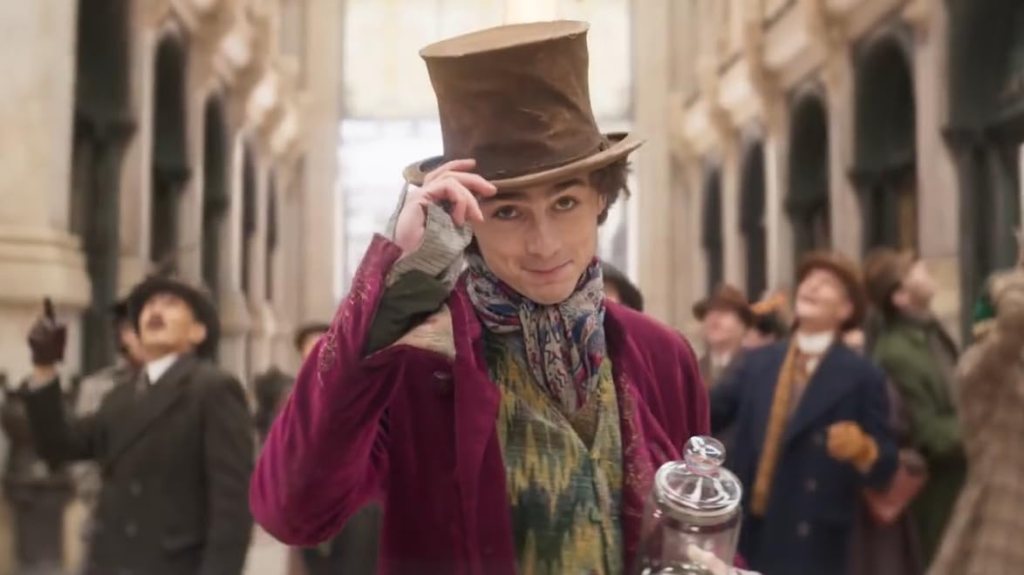
That definitely seems to be the case, as Wonka ended up being a ton of fun, manifesting the concept of childlike wonder into a sweet, glittery musical. The songs are fun, the performances are charming, and the set design is creative and extravagant. It does enough to differ itself from both theatrical iterations, which may leave you yearning for a bit more of that nihilistic weirdness. But as its own recipe, it’s sure to satisfy a sweet tooth for light-hearted, candy-coated silliness.
Wonka details the rags to riches tale of Willy Wonka, a magician turned chocolate maker who looks to earn his fortune in Europe by opening a chocolate shop at the world-famous Galleries Gourmet. But when hard times befall him like monopolistic chocolate conglomerates and indentured servitude, Wonka must rely on his ingenuity and new friends to overcome the odds and share his gift of making sweets with the world.

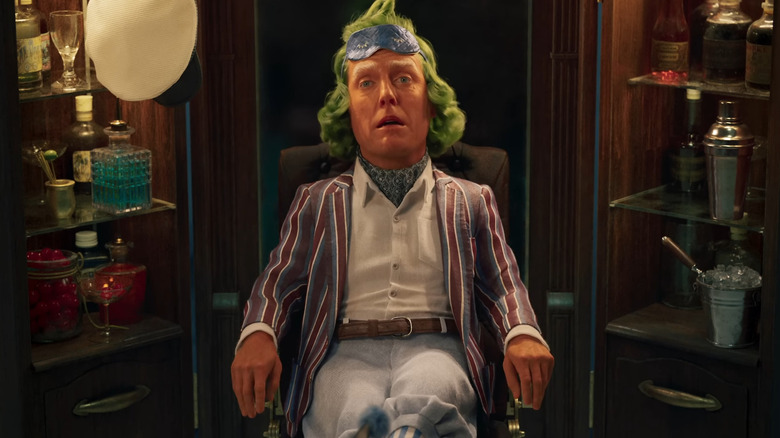
I’ll admit, I’ve been kind of clowning on this film since I saw the first trailer, particularly because of Timothee Chalamet’s performance. Chalamet is an undeniably phenomenal actor, mostly known for his dramatic roles from the likes of Call Me By Your Name, Little Women and Dune. The role of Willy Wonka was quite a vibe shift from his MO, and truthfully, the trailer didn’t exactly sell me on his ability to capture the off-kilter zaniness of Gene Wilder’s iconic performance. But I knew he had that dog in him; one only has to look at his old YouTube videos to know that. Upon seeing the film, I actually thought he did a pretty good job, capturing a gullible yet well-meaning dreamer ready to see goodness put into the world. While not exactly layered and occasionally inconsistent in his believability, Chalamet’s Wonka is endearing and a lightning rod for optimism and bright-side gazing. Not to mention the physicality Timothee displays, doing a bang up job with his singing and dancing. Towing the line of bubbliness just enough as to not be too overbearing or sickly sweet, Chalamet does validate himself as an actor with the range to move from the dark to the light when the role calls for it. His chemistry with a young orphan named Noodle, played by Calah Lane, is one of the film’s highlights. The chemistry of the two is a joy to see unfurl, with both being connected by loss yet each finds a spark of hope or ingenuity in the other. The supporting cast fills the film out with comedic and at times dastardly performances from Keegan-Michael Key, Olivia Coleman, Matt Lucas and Sally Hawkins. The goofiness is cranked all the way up, and everyone gets to do a silly little accent and really bounce off the wall here. And then there’s Hugh Grant, who from the sounds of it had to be put on a special watch while making this. He plays an Oompa Loompa, and I think he might even tell you his performance feels very phoned in. I get it. It’s not exactly the most meaty role out there, but hey if you can be in that boring Guy Ritchie film from this year, you can probably afford to be in something a little more fun.
Like its two predecessors, Wonka is sweetened with several musical numbers, many of which feature extensive choreography that makes great utilization of the setting. There’s some decent earworms in there, like the opening Hat Full of Dreams which outlines Wonka’s goals and intentions in a classically upbeat manner; Scrub Scrub, a sliver of upbeat comradery meant to mask the monotonous days in the bowels of a laundromat; Sweet Tooth, a persuasive villain song detailing the exchange of chocolate for murder; and For a Moment, an uplifting ray of sunshine that briefly takes you to another world, void of the troubles that plague you. There are plenty more songs too, but unfortunately I did find them to start feeling a bit too samey in both composition and presentation, which made a lot of them start to bleed together in my mind. They are certainly fine for what they are, but I definitely would have welcomed a bit more variety in the music department from time to time.
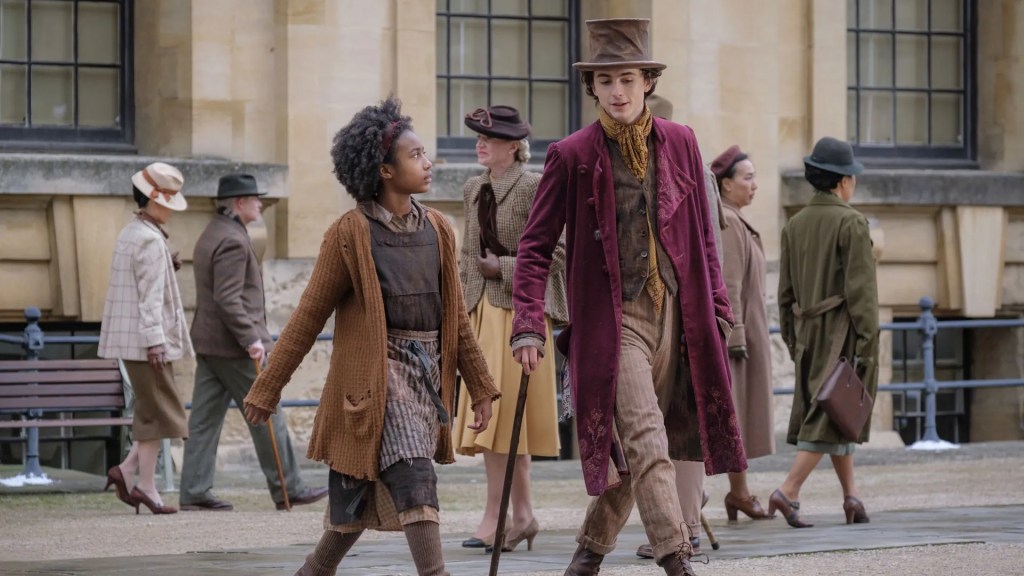
The world of Wonka is split into two parallels; the drab, depressing streets of the poor and the vibrant, sugary world of Wonka’s imagination he works to bring to life. What these two worlds share is a practical backbone, with quite a lot of beautifully crafted set pieces and environments. The intricacies in these designs is absolutely what a Wonka movie deserves, and I’m glad the team had fun here, especially with the candy designs from the individual pieces to the elaborate, lifelike candies Wonka later introduces in his shop. Of course there is a bit of CGI to bring these fantastical moments to life, and for the most part they’re fairly okay. Sometimes the Hover Choc feels a bit too separated from the scene and, honestly, the Hughmpa Groompa effect lacks the genuine presence of the little orange men from the other films. Yet the film is so charmingly dreamlike, to the point where I’m willing to forgive a bit of inconsistency.
You may be wondering how this film connects to the 1970s film, and to a certain extent, it kind of does and kind of doesn’t. There’s still a lot of time to pass between where Wonka ends in this film and where he begins in the canon of the original story, but there is a bit of a disconnect between the two characters. The darker, more cynical layers of the character present in Gene Wilder’s interpretation are absent in this film, which does make sense given this is the beginning of the character’s journey, but I do think this makes him far less interesting. I’m not saying he had to be the same chicken beheading psycho from the original story, but I think seeing glimpses or flashes of the man he would become not only would closer tie the character to the original, but perhaps give the character a bit more inner turmoil to overcome rather than just the simple poor vs. wealthy dynamic the film goes for. This anti-capitalist direction for the film is fine for its basic conflict, though I do wish more could have been done with Wonka himself to make his character arc a bit more internal.
Wonka, as you would hope, is a bit like being in a candy shop. It’s pretty to look at and often enchanting, offering a wide variety of joyous releases through charming performances, catchy musical numbers and whimsical visuals. Overexposure may sour you on the more sickly-sweet or even artificial flavors the film offers, yet the feeling of child-like wonderment is sure to affect you in one way or another. Chalamet does an admirable enough job captaining the experience, with the film’s physical and technical supporting players wrapping everything in a neat and lavish package. Somewhere deep inside you may find the golden ticket that makes these origin films work, like actual care and respect for the IP and a drive to be original without completely altering what makes the property beloved. It’s a fun time if you enjoy musicals, rag to riches tales set in old England, or seeing the light die in the eyes of a seasoned actor. Seriously hope someone kept Grant away from sharp objects while filming.
Rating
Silver Lining
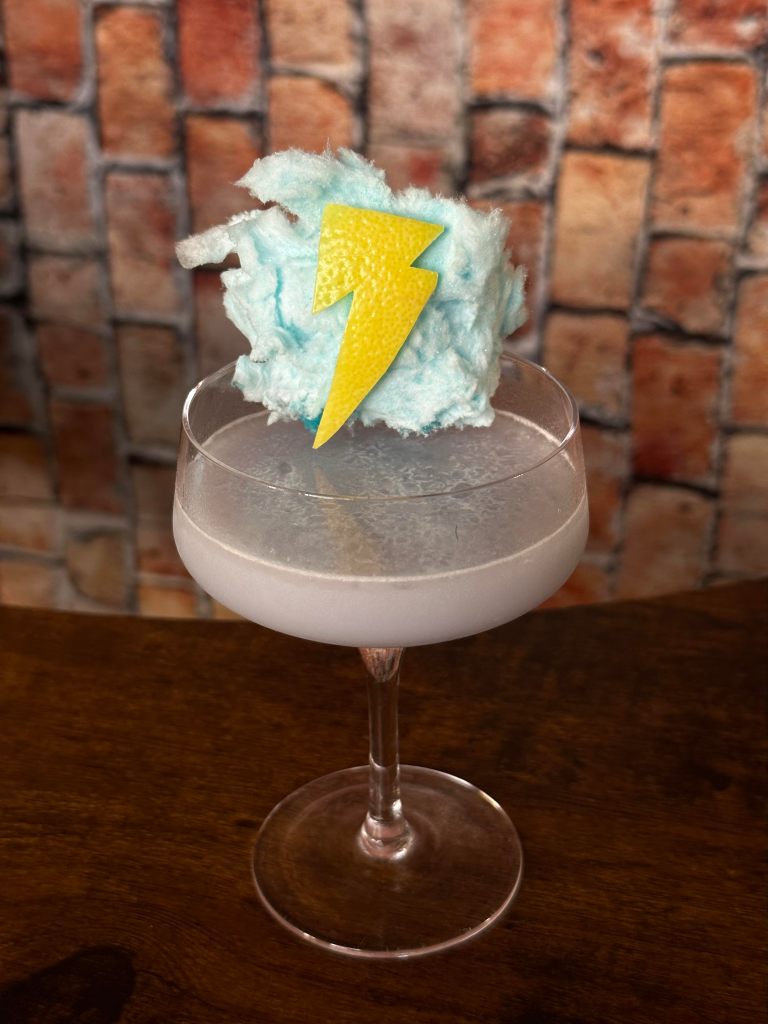
If you’re up wonking your willy and need a drink that captures the sweet inventiveness of Willy Wonka, look no further than the Silver Lining cocktail. This drink is actually a combination of two different chocolates Wonka creates in the film, the Hover Choc and the Silver Lining. The drink itself is more closely connected to Hover Choc’s stated flavor profile of chocolate, marshmallow, caramel and cherry, while the garnish is reflective of the actual silver lining chocolate, which is made with cotton candy and a lightning bolt. This is a pleasantly sweet dessert cocktail that doesn’t even require a bunch of orange men slave labor, making this drink both ethical and OSHA certified.
Ingredients
- 1/2oz creme de cacao
- 2oz mashmellow vodka
- 3/4oz cherry syrup
- 1/4oz salted caramel syrup
- 1/2oz lemon juice
- dash blue curacao
- Garnish: cotton candy
- Garnish: lemon peel
Instructions
- Add ingredients to a shaker and shake with ice.
- Strain into a chilled coup glass.
- Garnish with a tuft of cotton candy and a lemon peel cut in the shape of a lightning bolt.
 The Martini Shot