
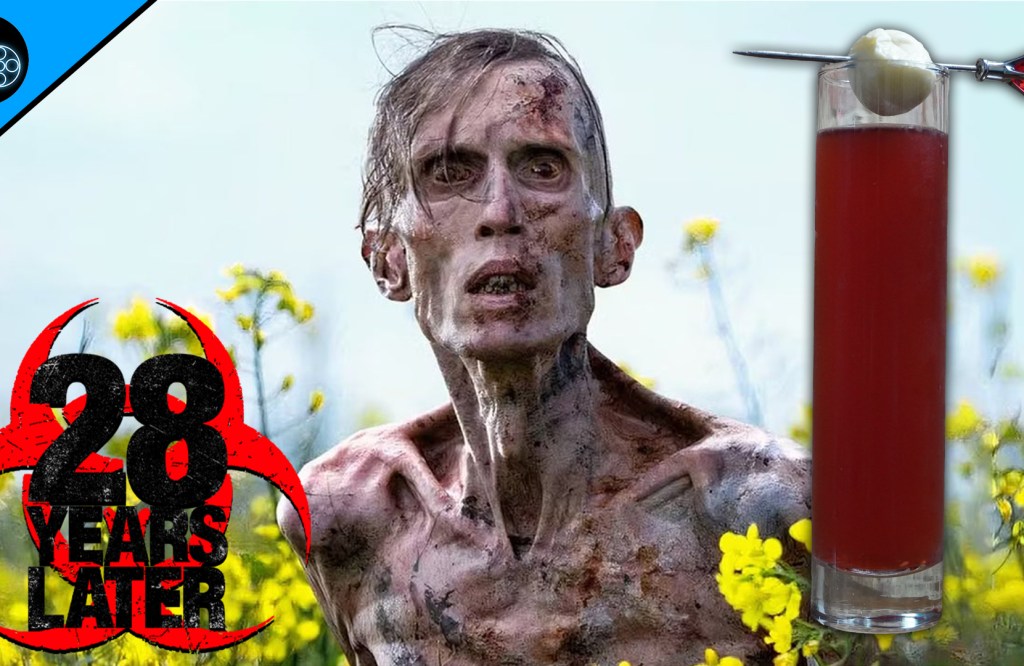
When you go to see a zombie movie, what do you expect to see? High octane terror? Gruesome violence and dismemberment? The realization that we are the biggest monsters in a world full of brain eaters? It’s such an expected formula that we’ve now seen every which way the genre can go, for good or for worse. I feel like we’ve kind of become completely desensitized or willfully ignorant to what the bigger picture is in these movies, from the underlying rage of domestic life to the shambling droning of consumerism. But sometimes a zombie movie is just a zombie movie, made for thrills and nothing else. 28 Years Later is not that. In fact it’s so much more. Ever since I saw that first trailer that hauntingly recited a British war poem over it, I knew we were in for something special. Maybe not “best of the year” special, but holy shit, it just might be.
Director Danny Boyle and writer Alex Garland have returned to a world of rage and terror, and I’m not just talking about the world in the film. In this post COVID era, where isolation, distrust and clinging to the past is out to tear us apart, there is a ton of horror to be found that doesn’t exactly involve rage-filled corpses. Okay, there’s plenty of those in the real world too, we just won’t stop electing them. But 28 Years Later’s look at the fall of society is so visceral and poignant while finding room for true compassion, making it feel so cathartic to the era we live in. It goes well over the top with its editing style, a choice that may scare some people off, but real Boyle heads know what’s cooking. Yet through the mania and the violence is a soothing reflection on the acceptance of death and the destruction of innocence that, honest to God, nearly brought me to tears. I can’t remember the last time I’ve been so subverted in such a positive way. I definitely haven’t forgotten what Boyle, Garland and company are capable of, but sometimes I forget what horror is truly capable of, and boy, do I love being reminded.
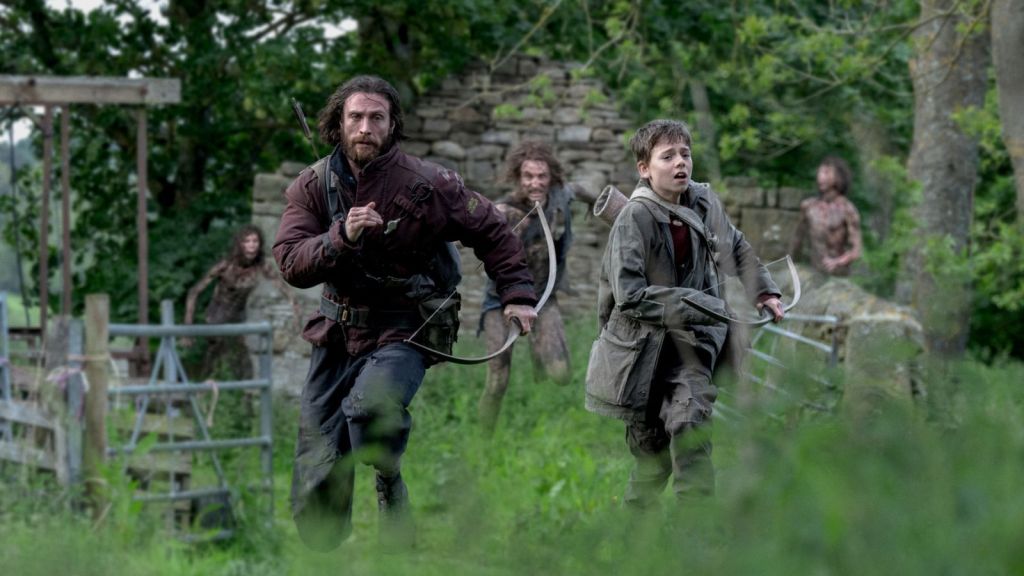
28 years after a virus that sends humans into a violent, animalistic rage swept the UK and closed it off from the rest of the world, little colonies of people try to rebuild their own societies. This is where we meet Spike, a young boy being pushed into shocking, unflinching adulthood while his sick and forgetful mother wastes away in bed. When Spike hears word of a doctor living on the mainland, he goes against his father’s wishes and takes his mother to see him, braving the terrifying world of monsters that lie just beyond his settlement’s walls.
The first chunk of the film goes about how you would anticipate; Spike is taken to the mainland by his father to hunt infected in order to toughen him up. It’s a tense sequence of events driven not really by survival, but rather, the illusion of it. They aren’t putting themselves into danger to hunt, forage or scout. They’re here to kill, and that’s it. This kind of establishes what the tiny world of the settlement embodies. Sure, this is a learning experience for Spike, but one that arguably does more to build upon his paranoia rather than actually support his community. This section of the film maintains the kind of chaos and brutality I was expecting from the film, while also giving us a glimpse of the talents of young Alfie Williams. This is his first major role from what I can tell, and he truly does a phenomenal job. Spike is one of those characters that I know people are gonna complain about because he makes a lot of bad decisions. You know, like most kids. Sure, bringing his sick and forgetful mother to the land of zombies is not a good idea, but his actions reflect a bigger picture. The whole film at first feels like a fight against death, but really, it’s a fight for life, which, yes, are two different things. His father, played very well by Aaron Taylor-Johnson, is ready to give up on his wife, because truth be told, fighting the crazy hordes is much easier than fighting for his wife’s health. It’s something out of his control, but his unwillingness to give hope a chance is ultimately what drives Spike from their village. Additionally, Jodie Comer’s Isla, Spike’s sick mother, can be pretty gut wrenching at times. She’s slowly losing agency over her memories, often confusing Spike for her own father, which also reflects the position of caretaker and protector that Spike finds himself thrust into. All around, super solid character work.

As the film goes on, there’s a very notable shift in the vibe, as coincidently, the land of less civilization brings out much more humanity. This is also when we get to see a bit more humor bleed through the melancholy, showing that even some happiness can be brought from darkness. Whether it be from a lone Swedish soldier who reminds us that the rest of the world has continued to develop outside of Britain, or simply just seeing an alpha-zombie constantly hanging brain, there’s a surprising amount of laughs to be had alongside the horror. But the film soon gets more meditative and a lot more real, tackling the things we can’t control like death. This leads us into the introduction of Ralph Fiennes character, Dr. Kelson, who I won’t talk too much about to avoid spoilers. But I’ll just say he’s the best character in the whole thing. This latter portion of the film is genuinely far more tender and moving than anything I was expecting from a rabid zombie film, but I think it gives so much heart to this film.
And although this film has a lot of grittiness and visceral intensity to it, Jesus, does it look gorgeous. A lot of this thing was shot with an iPhone 15, and sure, there’s some rigs and stuff upping the quality but still, how does this look better than movies shot with cameras that cost a zombie arm and a zombie dong? From a terrifying dash across the ocean backdropped by a stunning nebula to haunting and ethereal night surrounded by a temple of bones, this thing is constantly drop-dead gorgeous. Shooting with small iPhones apparently gave the crew more freedom to traverse the environment they were shooting in, grounding the film further and making everything feel massive in the process. The world building is stellarly ominous, ripe with so much potential that will no doubt be harvested in future films. But don’t get me wrong, this whole movie isn’t exactly the kind of artsy fartsy horror film you may be thinking.
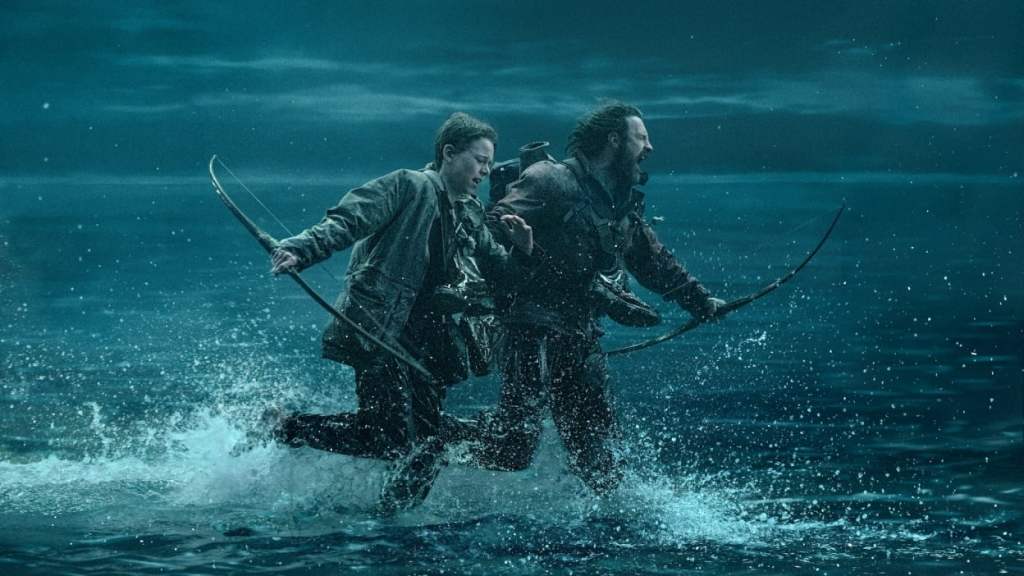
Like the original film, an aggressive style of editing is employed throughout the film, often in places it makes sense but also areas where it doesn’t. Quick cuts, dramatic closeups, and repeating frames work together to give many scenes a heart pumping intensity threatening to put you in cardiac arrest. There’s a lot of bold, out there choices too, like using 20 iPhone cameras to shoot a kind of rotating bullet time effect whenever an infected gets skewered with an arrow. It’s definitely not a clean cut film, and the abrasive style might not be for everyone. Hell, it actually took me a minute to get used to it, but once I did, I was floored. The insane editing is also accompanied by an equally insane score, composed by Scottish hip hop ground Young Fathers. Somehow, these guys were able to create a score that is not only aggressively disorientating and in your face, but also strangely beautiful at times. It feels incredibly unique and further gives this film an identity you are not going to find in any other horror film today.
As a horror film though, it may not fully deliver in the way audiences are expecting. Don’t get me wrong, there’s plenty of gross, naked, howling infected to go around, but the film isn’t shy about focusing far more on the human drama rather than the threat of the monsters. It’s kind of the same complaint I have for a lot of the modern Godzilla and Kong movies, only this time, the human element is actually good. It really is the Godzilla: Minus One of the modern zombie genre, and sure, it definitely isn’t the first of its kind. But it’s that unique voice driving the film that’s made me head over heels for it, despite it potentially not being as terrifying as 28 Days Later. There’s still moments of spines being ripped out by the head Sub Zero style and intense chases through the woods to keep the heart pumping, but it’s all certainly not the crux of the narrative, but rather, a supporting player. It’s definitely not what I was expecting, and that may turn you off from seeing it, but I implore you to go in with an open mind and tempered expectations.
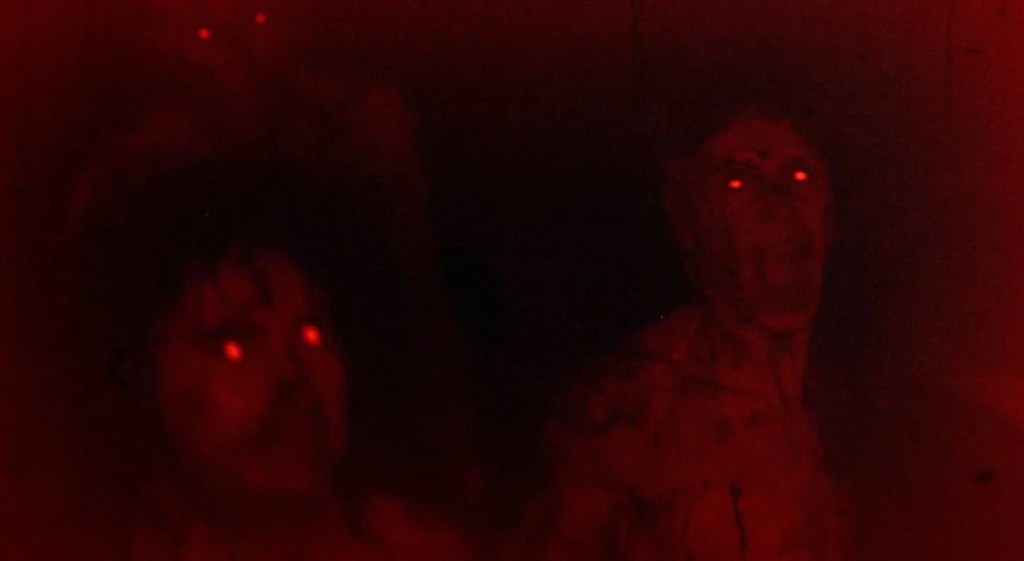
28 Years Later manages to be both an energy drink injected straight into your bloodstream and a profoundly moving reflection on death and the warring to reclaim the past without looking ahead to the future. It’s staggeringly shot and frantically edited to create a film that borders on tonal whiplash, but always finds a way to reel itself in and regain its composure. This is a film I cannot wait to see again, as it begs for a rewatch to fully appreciate the craft that’s gone into it. 2025 is really cementing itself as a year of grade-A horror films after this and Sinners, and I hope the train keeps running with films like Weapons, Together, Him, and Clown in a Cornfield. That last one is already out, but my own personal fears have kept me from watching it just yet. I just can’t stand cornfields.
RATING
MEMENTO MORI

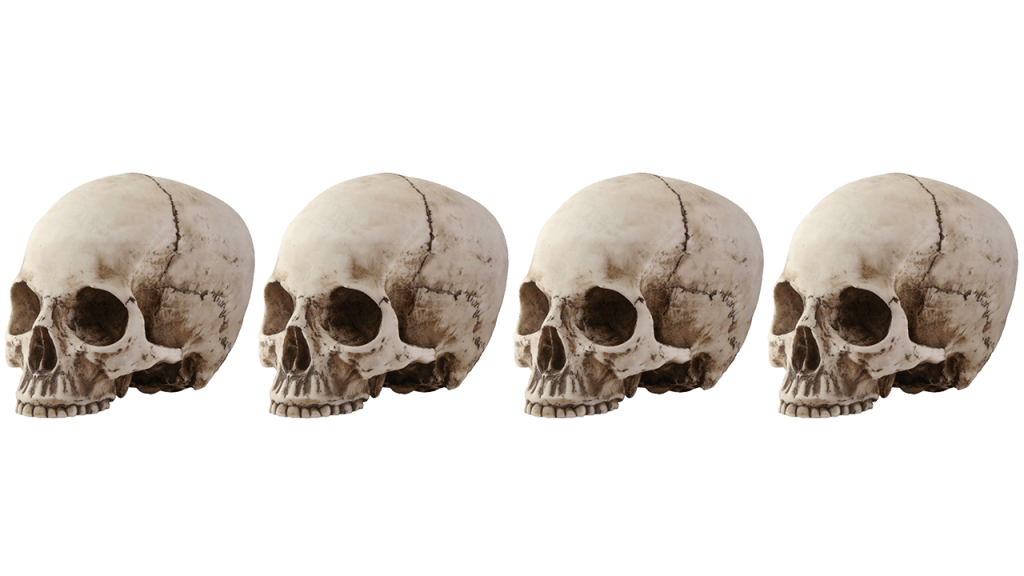
Memento Mori is Latin for “remember death” (loosely). And nothing helps jog the old memory, or brings on thoughts of the next life, quite like a tall drink. This slender, imposing cocktail is meant to be reflective of the bone temple seen later in the film, topped with a multitude of skulls. The concept of death is such a bitter sweet part of life, and that is reflected in this drink thanks to a mixture of Aperol, pomegranate juice and creme de cassis. And for your crowning skull, I went with a white chocolate ball to give you a nice snack while you sip. But remember the flipside of this phrase, memento amori: remember to love. So love yourself and don’t go overboard with these if you can help it.
INGREDIENTS
- 1.5oz gin
- 3/4oz Aperol
- 1/2oz creme de cassis
- 1oz pomegranate juice
- 1/4oz lemon juice
- 2-3oz sparkling water
- Garnish: White chocolate ball
INSTRUCTIONS
- Add all ingredients to a mixing glass and stir to chill.
- Strain into tall glass (over ice if preferred).
- Garnish with ball of white chocolate.
 The Martini Shot
One thought on “28 Years Later – REVIEW & COCKTAIL”