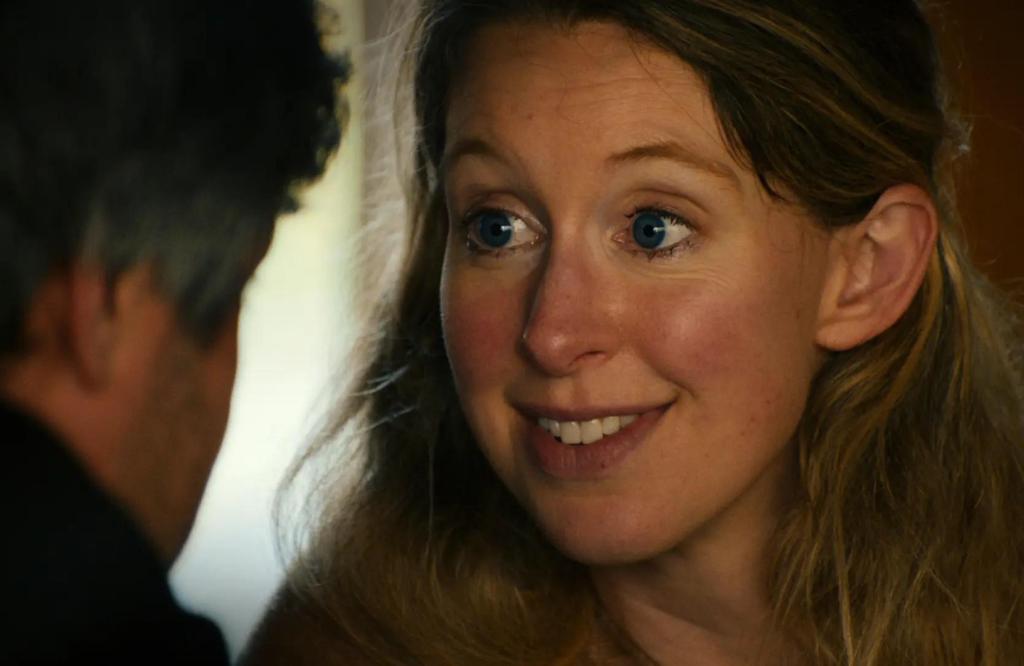
Hype is a tricky thing. When you hear about a new project, you want to get excited for it, but it’s hard not to be disappointed when something doesn’t end up meeting your expectations. This happens with movies every year; something gets called the best of the year, perhaps the best of the decade, and then when you watch it, it doesn’t quite blow you away like you hoped. And on the flipside, I try not to hype things up to the moon, because I never want to set someone’s expectations too high, especially when you have a broad audience that likes different things.
However… I think it’s about time you saw everything.
When this was shadow dropped at the Telluride Film Festival back in September, it was hard not to be intrigued. Master manipulator and convicted felon Elizabeth Holmes goes head to head with master manipulator television warping prankster Nathan Fielder. The King Kong versus Godzilla for the chronically online. The idea sounds intriguing enough, but what was really going on here? What was so important about this particular documentary that had everyone hyped and pumped for?
Because you may have seen everything, but you haven’t seen anything like this.
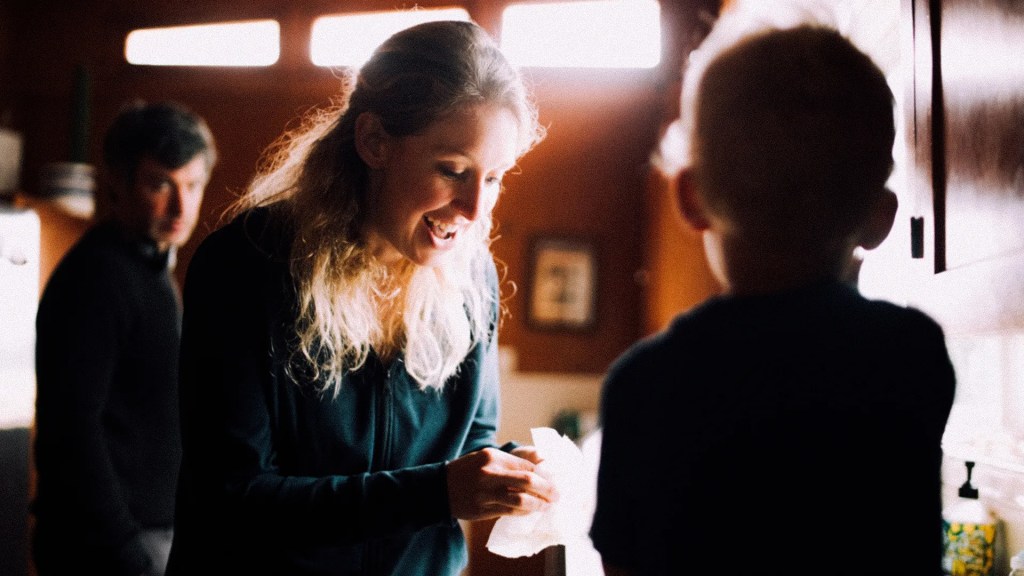
This is, and I’m trying not to be hyperbolic, one of the greatest documentaries I have ever seen. And yeah, you can throw my opinion in the trash if you want because I’m not the biggest documentary guy. I’m way more of a narrative feature kind of guy, which probably explains why I like this so much. With the combined efforts of Nathan Fielder and one of my favorite documentarians Lance Oppenheim, You Can See Everything transcends the genre and creates a farce that, despite its presentation and framing, is all legitimate. And yet everything ties together so perfectly, as if everything was predicted and planned from the jump. And this is more than just a character piece. Everyone is getting dissected, from Holmes to her partner to Nathan to you, the viewer. Everything is being challenged and questioned, and by the end you’re left without a true grasp on what’s real and what’s all a facade. It’s a film that forces you to engage with it long after you’ve seen it, and anything that can do that may just be considered best of the year material.
It’s important to look at the players here and see what this documentary aimed to do and what it ultimately ended up doing. Firstly, Elizabeth Holmes. Founder of the defunct health tech company Theranos, Holmes is 30 days away from an 11 year prison sentence when the documentary starts, and she enlists Fielder and co. to come and film her and her family’s life. The goal, I assume, was to change the public perception of herself from some malicious manipulator that defrauded investors to a sweet, easily pliable woman who’s taking the fall because of a number of other people’s failures. She is certainly the most complex character in this whole story, and one that will leave you guessing if she’s telling the truth or if you’ve been duped. Hearing Holmes talk about her supposed crimes is like listening to someone wearing a wire while hopped up on NyQuil. The way she denies these crimes sounds innocent enough at times, but other times, it’s like she lives in a whole different reality and will not budge an inch. It borders on insanity, but is it genuine or all part of the plan? That’s for you to decide, as well as the documentary team, but that is not as easy as you think.
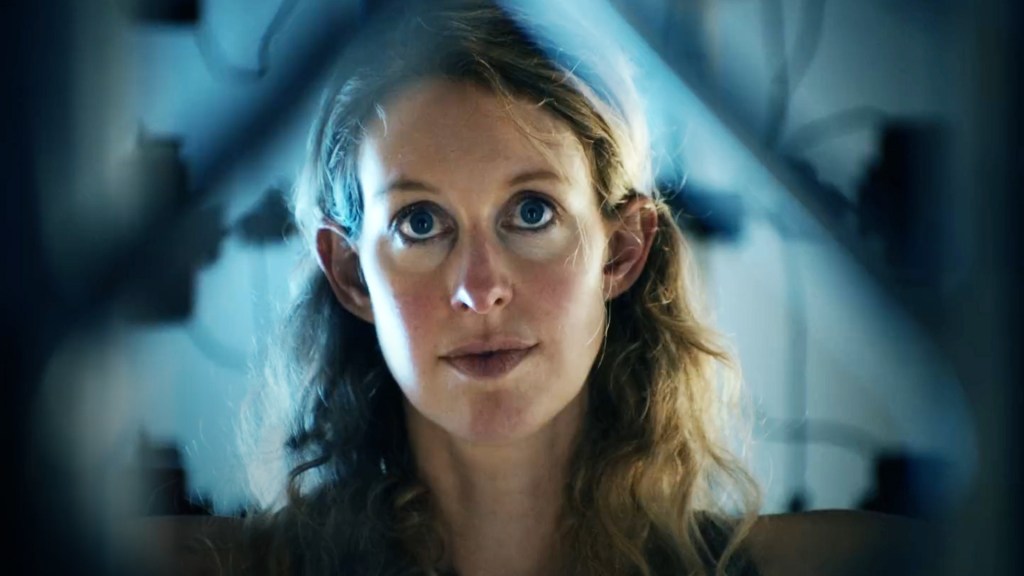
Then there’s Nathan, who wasn’t even supposed to be a central character in this thing. He was just supposed to be an unseen guiding hand for the whole thing, but there ended up being so much footage of Nathan talking with Holmes and her partner Billy that he had no choice but to become front and center. If you’re familiar with Nathan’s usual deadpan approach, there’s more of that here, but it’s crazy to see a guy often in control of the weirdness be at such a loss for words at times. Nathan becomes a character because his own thoughts and feelings about Holmes become integral to the narrative; feelings that he’s not even sure of. He’s trying to dig deeper, understand the psyche of the narcissists he’s interviewing, and at times he’s getting a brick wall, and other times, he’s getting more than he could have hoped to have.
And speaking of narcissists, Holmes’ partner Billy Evans is one of the most fascinating dickheads ever documented. He is unapologetically letting you see everything, and let me tell you, a lot of it does not make him look good. The things this guy says and does are best left behind closed doors, and yet he just lets the whole world see with nothing to hide. But the fact that he can do this so confidently, so unashamed of himself, really speaks to his character and what he aims to get out of this documentary. He’s not looking to show a different side to him, he’s looking to show all of him because he believes everything he says and does is right. Holmes is very similar in a way, but the dynamic these two have may sound normal at first, but it only gets stranger and more complex as the film goes on. Finally, there is an actor that appears about halfway through this that I won’t spoil, but they add a whole new layer to this thing. They too have a part to play in this, but they also served as someone who is willing to turn the mirror back on the ones calling the shots, and it takes this thing to a place I couldn’t have imagined it going to.
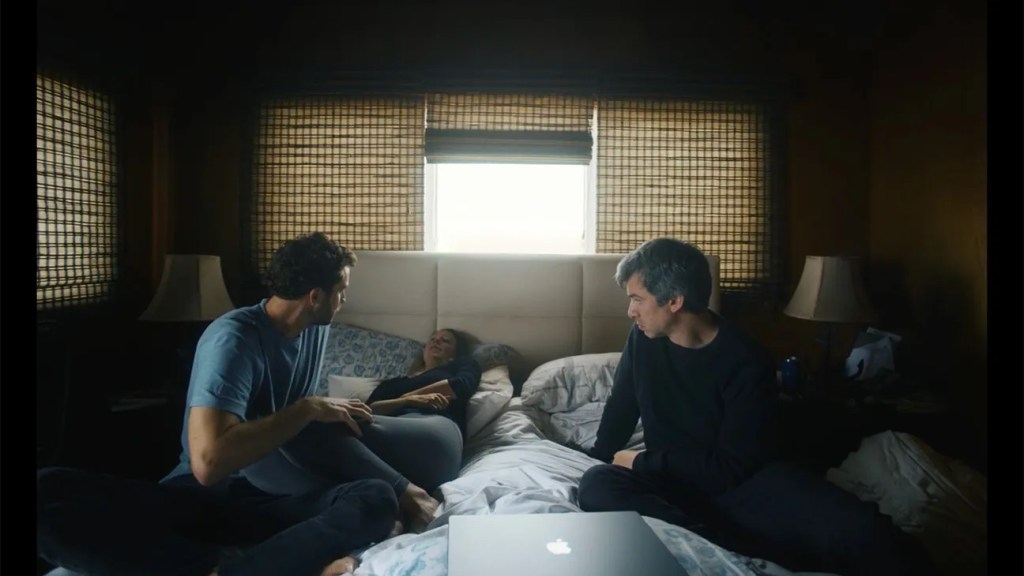
As much as this is a Nathan Fielder joint, the visual style is very much in line with Lance Oppenheim’s glowing and claustrophobic work. This name may sound familiar, as he did direct this year’s Primetime, but he’s perhaps most well known for his documentary work that blurs the lines between narrative fiction and non fiction. For a film most focused on the interior of homes and closeups on people’s faces, this thing is shot beautifully, really laying it on thick with gold warmth, dark blues and a whole lot of texture. These on the fly moments are captured absolutely perfectly, to the point where you’d think they were blocked that way. And it’s so intimate as well, pushing you up close and personal with the subjects, making you feel as if you’re in the room with them, even when you really don’t want to be. Sometimes the whole thing is hard to watch, but it’s impossible to look away because the unbridled unawareness of the stars is intoxicating. But what is it about all of this that has people calling this best of the year material?
There is honestly a lot to unpack in the intentions and the themes of this film. What the original intention could have been was to finally show the world the real Elizabeth Holmes, for better or for worse. Nathan gives her every opportunity to state her case, humanize her… and she just doesn’t take it. She commits to this idea that she’s done no wrong doing, even when it is painstakingly laid out in front of her. Nathan uses the classic skit Who’s On First to try and illustrate how Holmes’ words could be misconstrued or misinterpreted, but not only does she not see the similarity, she doesn’t get the joke. One of the funniest and most iconic bits of all time, and she doesn’t get it. This is a woman who created a billion dollar company, and she sounds like this is the first time she’s heard the concept of a joke before. This, on top of asserting that she’s never lied in her life before, makes her look the farthest thing from being human. Is this how she really is, or is this all a part of the identity she’s crafted for the cameras. You see seemingly genuine hurt and anguish in her when she talks about being this monster the world has made her out to be, and it even gets Nathan to second guess what he thought of her. But this woman has been convicted of a crime. That’s not an opinion, that’s a fact.
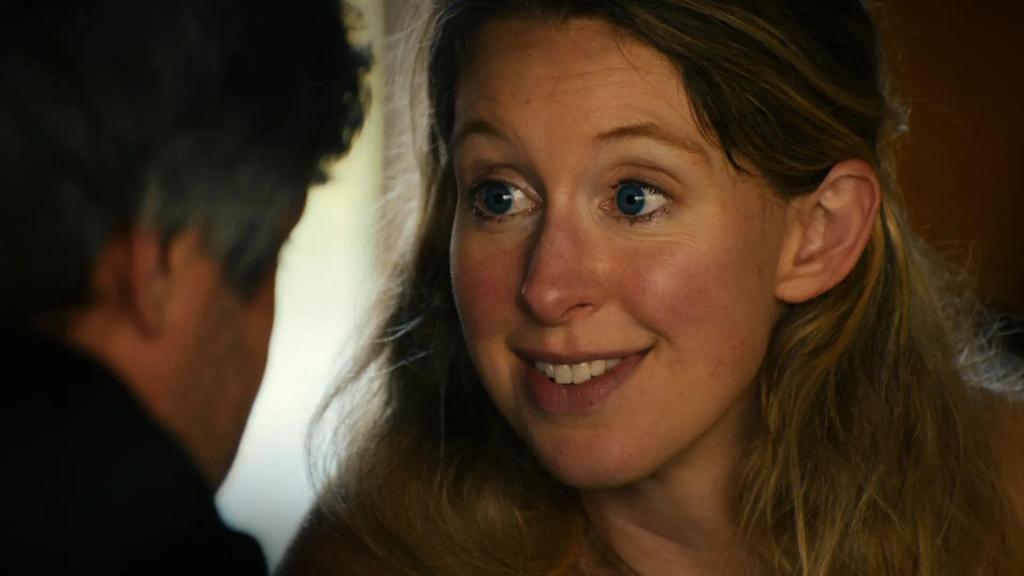
But, you know, maybe the world did get some things wrong. Maybe The Dropout wasn’t the most honest and accurate representation of her history and situation. Maybe the camera isn’t always capturing the truth, and that goes for this film as well. But while the film spends its first half trying to get to the truth, the whole thing completely goes off the rails once Holmes actually makes it to jail, and there’s still another 2 hours to go. Without spoiling, there are some jaw dropping revelations and character moments here that floored me, both from shockingness and just the boldness on display. It’s like not realizing you sound crazy until you say something out loud, but then still doubling down on that craziness. And it completely flips your perception of these people upside down, making you wonder if evil can present itself as helplessness, and what does it say about us when we buy into it? No one here is safe from criticism, and it makes the entire thing infinitely fascinating.
Like I said, I really don’t want to overhype this for people, but this is a one of a kind film. Shot as if there was a script but operating as if the script was set on fire, You Can See Everything’s intimate portrayal of the face of manipulation is spellbinding, absurd and thoughtprovoking. It is truly unlike anything I have seen before with so many layers to dissect and peel back, and the great thing is that there’s no definitive end. You’ll be left with questions and second guesses and an urge to talk it through with someone. Maybe you’ll come to your own conclusions on how to feel, but bottom line is you gotta see You Can See Everything. Non negotiable. You’ll be doing yourself a disservice as a movie lover if you let this documentary pass you by.
RATING